World
South Africa demarches US ambassador Bozell after media criticism
South Africa summoned US ambassador Leo Brent Bozell on Tuesday over his criticism of Pretoria, after Washington imposed visa restrictions on unnamed South Africans on 15 September.
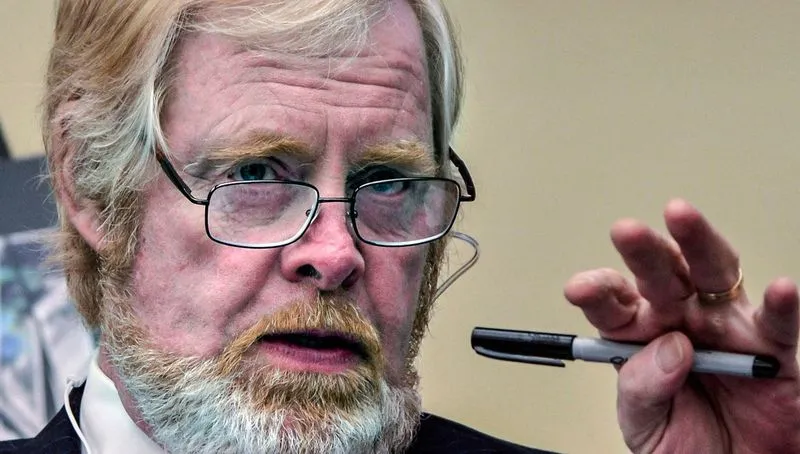 Photo: Daily Maverick
Key points
South Africa demarched US ambassador Leo Brent Bozell on Tuesday after his public criticism of the government, while the US repeated its demands on five domestic policy issues.
South Africa summoned US ambassador Leo Brent Bozell on Tuesday and delivered a demarche, a formal diplomatic reprimand, over his criticism of the Pretoria government during the past two weeks. The summons came from the Department of International Relations and Cooperation (Dirco), South Africa's foreign ministry. A US official confirmed the demarche to Daily Maverick, saying Bozell was called in to discuss the bilateral relationship.
The reprimand marks the second time South Africa has demarched Bozell since his arrival. He was first summoned in March, shortly after taking up the post, for saying he did not care that South African courts had ruled the Kill the Boer chant was protected speech, and that he regarded it as hate speech. This time, Dirco summoned him over a series of remarks in South African media sharply critical of the government.
What the demarche covered
The demarche followed a media blitz by Bozell in which he elaborated on US grievances against Pretoria. South African officials, quoted anonymously by News24, said Bozell's remarks irritated Dirco and prompted the summons. The criticism came after President Cyril Ramaphosa sent a letter to President Donald Trump on 12 September, reporting what Pretoria regarded as considerable progress in meeting US demands on five domestic policy issues.
A US government official confirmed the demarche and stressed that Washington had been clear about the relationship it sought. The official said the United States was not interested in diplomatic manoeuvring, procedural delays, or dialogue for dialogue's sake, and that the ball was now in South Africa's court to outline the relationship it wants and respond to Trump's executive order.
The five US demands cover domestic policy areas Washington wants Pretoria to change. The United States wants its companies at least exempt from black economic empowerment, the race-based economic redress policy; wants expropriation without compensation scrapped; wants the government to condemn the Kill the Boer chant; demands farm murders be properly addressed; and says Pretoria should not interfere with Trump's programme offering refugee status to white Afrikaners it says are persecuted on racial grounds.
The five US demands
Alistair Ruiters, Ramaphosa's international policy adviser, said that even Bozell had acknowledged South Africa had addressed two of the five demands: that Pretoria was not interfering in the refugee programme, and that expropriation without compensation was being challenged in the courts. Ruiters said Ramaphosa was addressing the rest, having announced a review of black economic empowerment, signed the Preventing and Combating of Hate Crimes and Hate Speech Act, and implemented a rural security strategy.
On 15 September, US Secretary of State Marco Rubio announced visa restrictions, targeted travel bans, on unnamed South Africans responsible for implementing policies the US did not like. Bozell then warned on X that further measures would follow if South Africa did not immediately address the issues, before conducting the media blitz that preceded the demarche.
Visa restrictions preceded the summons
ANC secretary-general Fikile Mbalula, writing in an opinion piece, responded to Bozell's public presentation of the five asks, saying the relationship was too important to be reduced to a checklist of demands. Mbalula said Bozell had declared himself an ambassador of AfriForum at the group's community safety centre in Centurion, and argued that a president cannot treat an independent court's judgment as an instruction from the executive.
On rural crime, Mbalula noted that Bozell conceded a National Rural Safety Strategy already exists, covering farms, smallholdings and surrounding communities, and that government has reported implementation across rural police station areas. In the fourth quarter of 2024/25, the South African Police Service recorded six murders in farming communities: two farmers, three employees and one farm dweller.
The dispute turns on whether Pretoria's steps satisfy Washington. South Africa points to court challenges, new legislation and the rural security strategy; the US points to visa restrictions and Bozell's warning of further measures. The next step rests with Pretoria, which the US official said must outline the relationship it wants and respond to Trump's executive order.
Frequently asked questions
Why did South Africa demarche US ambassador Bozell?
South Africa summoned Bozell over his criticism of the Pretoria government in South African media during the past two weeks, including a media blitz elaborating US grievances after visa restrictions were announced on 15 September.
What are the five US demands on South Africa?
The US wants its companies exempt from black economic empowerment, expropriation without compensation scrapped, the Kill the Boer chant condemned, farm murders addressed, and no interference with Trump's refugee programme for white Afrikaners.
Has Bozell been demarched before?
Yes. This was the second demarche. He was previously reprimanded in March, soon after arrival, for saying he did not care that South African courts deemed the Kill the Boer chant protected speech.
How this story was checked
- Fact-checked against 3 cited pages. 8 figures, dates and quotations in this story were found on the pages it cites.
- Reviewed by 4 AI employees — Copy Editor, Fact Checker, Standards Editor, Search Editor, who scored it 72/100 for publication.
Pages checked (3 of 3)
- dailymaverick.co.zaread and checked
- dailymaverick.co.zaread and checked
- news24.comread and checked
Written by Kaer from public reporting. Checked 30 September 2026.