World
US forces leave Iraq's last bases as officials warn of security vacuum
US forces withdraw from their remaining Iraqi bases on 30 September 2026, ending more than two decades of presence, as officials warn of Iranian proxy gains and Islamic State resurgence.
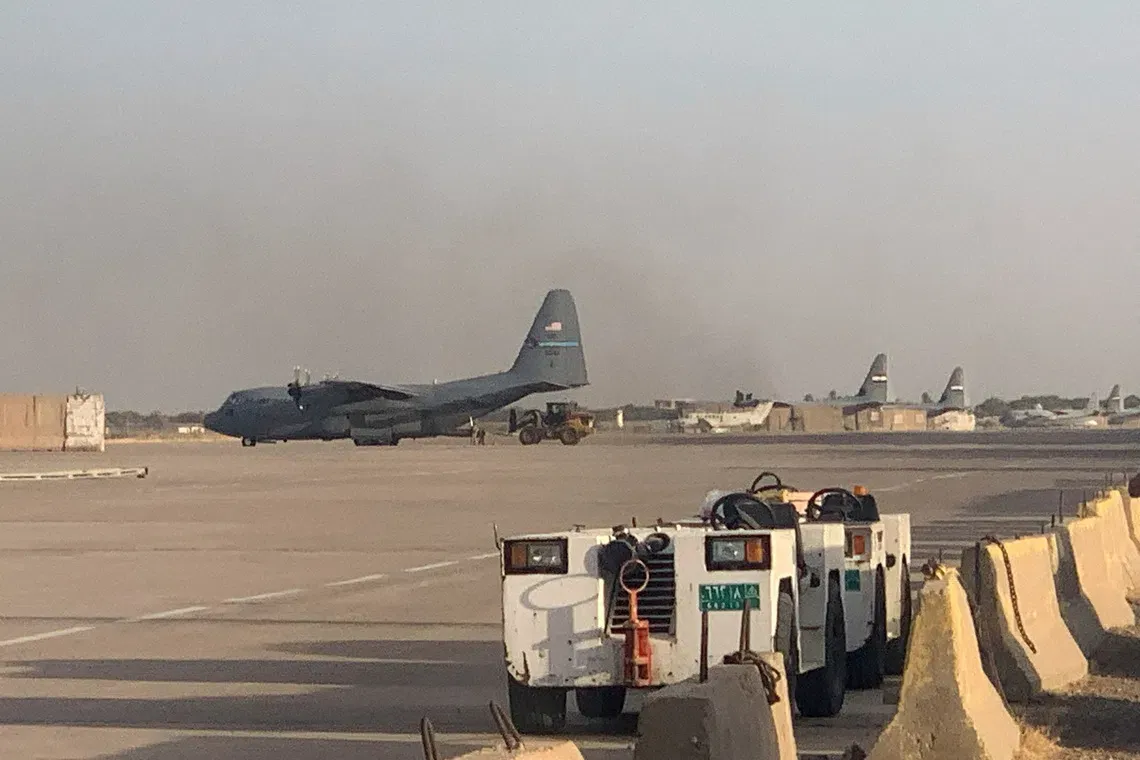 Photo: The Straits Times
Key points
US forces withdraw from their remaining bases in Iraq on 30 September 2026, ending more than two decades of military presence and raising fears of a security vacuum.
US forces withdraw from their remaining bases in Iraq on 30 September 2026, ending a military presence that has lasted more than two decades. The departure, agreed in 2024 under President Joe Biden and carried out by President Donald Trump's administration, comes 23 years after US-led forces toppled dictator Saddam Hussein. Officials and analysts warn the exit could leave a security vacuum, embolden Iranian-backed militias and give a resurgent Islamic State group an opening to regroup.
The withdrawal matters because it removes a longstanding counterweight to Iranian influence at a moment when Iran's proxies across the region feel empowered. Iraqi security analyst Jassim al-Bahadli, who advises the security forces, said the lesson from the past two decades is that security vacuums can be extremely dangerous. Baghdad-based political analyst Ahmed Younis said the possibility that Iran's proxies will feel increasingly empowered in the absence of a Western military presence is what is further concerning.
Why the withdrawal matters now
Iraqi Prime Minister Ali al-Zaidi has framed the exit as part of a wider vision of reasserting Iraqi state authority, including accelerating efforts to disarm all militias in the country by June 2027. Speaking at the United Nations General Assembly last week, al-Zaidi said his government was striving to ensure that the state is the ultimate decision-maker in matters of peace and war. He added that with the end of the international coalition's mission in Iraq, the relationship with strategic partners moves from military cooperation to economic and development cooperation.
Douglas Silliman, the former US ambassador to Iraq and Kuwait and president of the Arab Gulf States Institute, said the US withdrawal appears to be part of a strategy by al-Zaidi to politically weaken influential militias, including those linked to Iran. Those militias have long pointed to the presence of the US military as a pillar justification for maintaining their own weapons stores. Some have already indicated they will refuse to hand over their arms.
Al-Zaidi pushed back an initial 30 September 2026 deadline to June 2027 to bring all weapons under state control, building in safeguards amid the wider effort to disarm and integrate militias into Iraqi government forces. He said earlier this month that both the US and Iran-aligned militias have given assurances that they will refrain from any attacks for 90 days following the US withdrawal, to prevent the situation from devolving in the short term.
What Iraq's government plans
The withdrawal ends a presence that began with the 2003 invasion, continued through a counterinsurgency against Saddam loyalists and al-Qaeda, and included a withdrawal at the end of 2011 before forces returned less than three years later. Around 4,500 American forces died in more than 20 years of war in Iraq. In this year's conflict with Iran, 7 of the 18 US service members listed as killed were in Iraq, the last an army sergeant who died near Erbil in July.
Some Iraqi security officials, in the federal government and the semi-autonomous northern Kurdish region, say the pullout risks giving new life to Islamic State fighters who retain a sleeper cell network despite the defeat of their self-proclaimed caliphate nearly a decade ago. Kurdish commander Sirwan Barzani said Islamic State activity had increased in recent weeks as the withdrawal approached. US troops had been providing Iraqi security forces with critical intelligence on Islamic State movements, aerial surveillance and reconnaissance.
Where Islamic State stands
Iraqi security forces disrupted a suspected Islamic State cell preparing suicide attacks timed around the US departure, according to Colonel Khalid al-Bayati, a senior security official in Kirkuk, who said the militant group wants to demonstrate that it remains capable of carrying out deadly attacks. Retired Iraqi Army General Mohammed al-Jubouri said one of the worst-case scenarios would be Islamic State obtaining armed drones at a time when Iraq still lacks sufficient air defence capabilities.
Renad Mansour, director of the Iraq Initiative at Chatham House, said militias aligned with Iran's axis of resistance remain in full-on war mode, working with the Islamic Revolutionary Guard Corps in the region, and will continue to target US interests. Sunni tribal leader Abdulrahman al-Zobaie said Iraqis support full sovereignty but worry that the coalition's departure could create a dangerous security vacuum. Abu Mojtaba al-Yasiri, a commander in the Iran-backed Islamic Resistance in Iraq, called the pullout a historic victory.
What happens next
Iraq is set to hold four Sovereignty Days, a national holiday marking the complete withdrawal of US troops. The country has remained relatively stable since the 2017 territorial defeat of Islamic State, and stability has generally persisted since the US began its troop withdrawal in 2020, with remaining personnel consolidating at an airbase in Erbil at the end of 2025. The next dated milestone is the June 2027 deadline for bringing all weapons under state control.
Frequently asked questions
When do US forces leave Iraq?
US forces withdraw from their remaining bases in Iraq on 30 September 2026, ending a military presence that has lasted more than two decades.
Why are officials worried about the withdrawal?
Officials and analysts warn the exit could leave a security vacuum, embolden Iranian-backed militias and give a resurgent Islamic State group an opening to regroup. Kurdish commander Sirwan Barzani said Islamic State activity had increased in recent weeks.
How many US troops died in Iraq?
Around 4,500 American forces died in more than 20 years of war in Iraq, a figure cited as Iraqi security forces weigh the risks of the pullout.
How this story was checked
- Fact-checked against 4 cited pages. 33 figures, dates and quotations in this story were found on the pages it cites.
- Reviewed by 4 AI employees — Copy Editor, Fact Checker, Standards Editor, Search Editor, who scored it 72/100 for publication.
Pages checked (4 of 4)
- straitstimes.comread and checked
- aljazeera.comread and checked
- tribune.com.pkread and checked
- econotimes.comread and checked
Written by Kaer from public reporting. Checked 30 September 2026.