Software
Apple Pay launches in India with Axis Bank Visa and Mastercard cards
Apple Pay became available in India with eligible Axis Bank credit cards on the Visa and Mastercard networks on 29 September 2026, while RuPay cards and larger banks such as HDFC, ICICI and SBI Card stayed out.
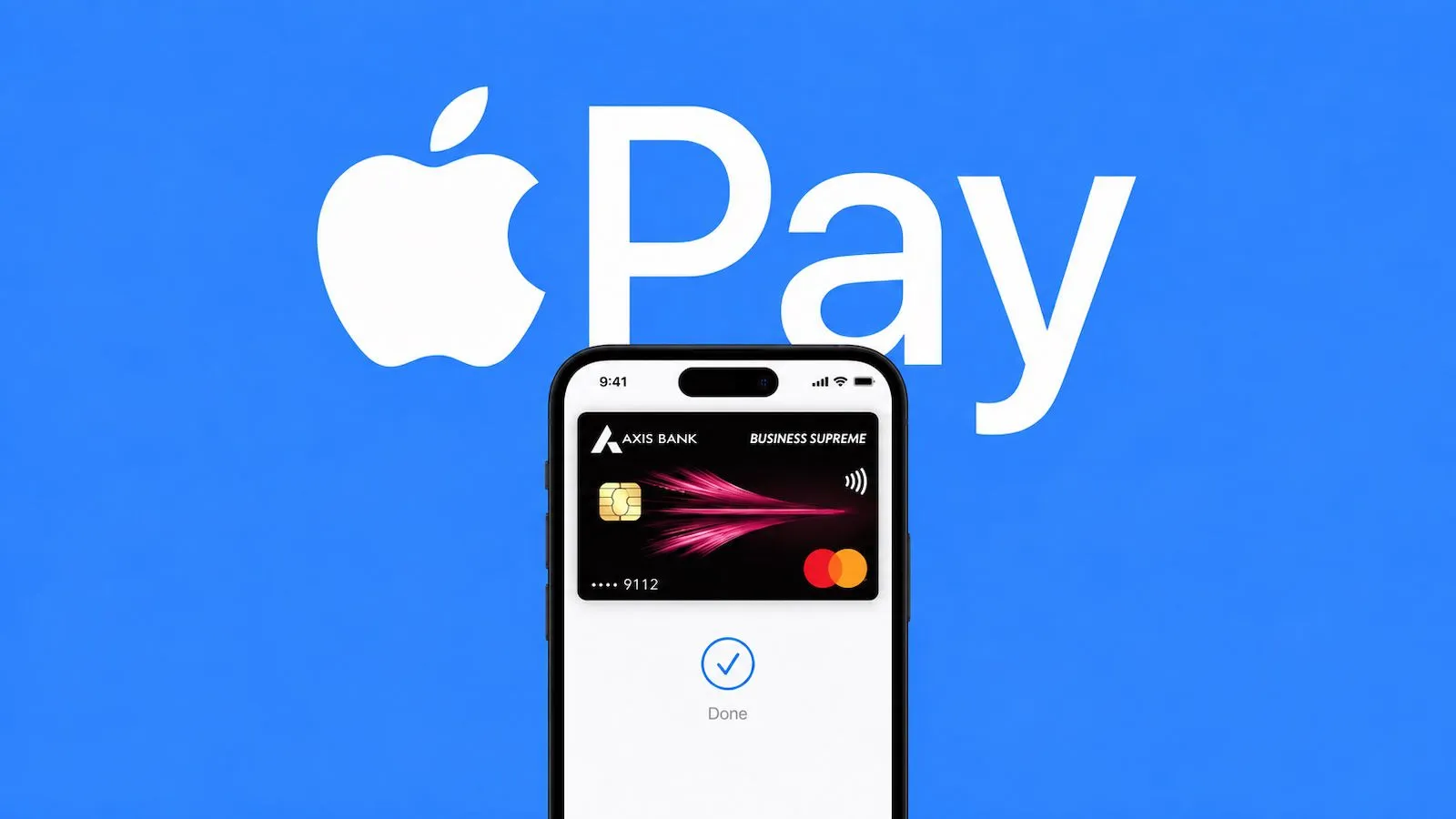 Photo: MacRumors
Key points
Apple Pay launched in India on 29 September 2026 with Axis Bank credit cards on Visa and Mastercard, excluding RuPay and major rival banks.
Apple Pay became available in India on 29 September 2026, letting customers with an eligible Axis Bank credit card on the Visa or Mastercard network add it to the Wallet app on iPhone and Apple Watch for contactless and online payments. The launch ends about a decade of rumours about Apple's payment service reaching the country, which regulatory issues had previously complicated.
The launch matters because it opens India's card payments market to Apple, but on narrow terms. Only Axis Bank credit cards on Visa and Mastercard qualify, and merchants and payment terminals must add Apple Pay support before it works. RuPay, India's domestic card network, is not compatible. Major banks including HDFC Bank, ICICI Bank and SBI Card have not added support, so most Indian cardholders cannot use the service yet.
What the launch includes
Apple Pay in India requires an Axis Bank credit card on the Visa or Mastercard network. Eligible customers add the card to Apple's Wallet app and use it for online purchases and contactless payments at supported terminals. Acceptance is restricted to merchants and payment terminals enabled for the service, so the feature will not work at every contactless payment location in the country.
The rollout is deliberately limited. HDFC Bank, ICICI Bank and SBI Card are not supporting Apple Pay at launch as negotiations over commercial terms continue, according to people familiar with the matter. Apple, Axis Bank, HDFC Bank, ICICI Bank and SBI Card did not respond to requests for comment. An earlier report had said Apple was preparing to launch in October with Axis Bank credit cards.
Acceptance will be uneven because Apple Pay is card-based and needs both card issuers and payment infrastructure providers to integrate with it. A transaction could work at a terminal run by an independent payments provider that has enabled the service, then fail at another terminal whose acquiring bank has not. That patchwork means a customer with a supported Axis Bank card may still be declined at some shops.
Why acceptance will be uneven
Apple is seeking a fee of about 20 basis points on transactions, according to people familiar with the matter. That sits against roughly 40 to 50 basis points of margin in the payments layer, a significant bite. The fee structure is broadly consistent with Apple Pay's commercial model in other markets. Apple's commercial terms have emerged as a sticking point with some of India's largest banks, which is why they are holding off.
The fee could still make India meaningful for Apple even if Apple Pay stays a niche service. The transaction fee gives Apple another way to monetise its growing base of iPhone users in the country. Apple accounted for 28% of India's smartphone market by value in 2025, up from 23% a year earlier, according to Counterpoint Research, and India accounts for about a quarter of global iPhone production.
The fee Apple is seeking
Apple Pay enters a market dominated by the Unified Payments Interface (UPI), a state-backed system that lets consumers move money directly between bank accounts without cards. UPI handles approximately 84 percent of India's digital transaction volume, and it does not work with Apple Pay. Scanning a QR code to pay straight from a bank account has become commonplace, so Apple Pay initially addresses a much smaller card payments market.
Apple Pay could still appeal to India's growing base of iPhone users, who tend to be more affluent and are more likely to use premium credit cards. Those customers could make the service hard for banks to ignore, despite UPI's dominance. The launch adds to Apple's expanding business in India, where it has been growing iPhone sales, local manufacturing and its retail footprint.
Why UPI dominates India
What follows next depends on negotiations with the banks holding out. HDFC Bank, ICICI Bank and SBI Card are not supporting Apple Pay at launch while talks over commercial terms continue, and RuPay remains incompatible with the service. Merchants and terminals must also enable support before Apple Pay works there, so acceptance will stay uneven as more of them are enabled.
Frequently asked questions
When did Apple Pay launch in India and with which bank?
Apple Pay became available in India on 29 September 2026 with eligible Axis Bank credit cards on the Visa and Mastercard networks, usable in the Wallet app on iPhone and Apple Watch for contactless and online payments.
Why doesn't Apple Pay work with all Indian cards and banks?
RuPay, India's domestic card network, is not compatible with Apple Pay. HDFC Bank, ICICI Bank and SBI Card have not added support at launch as negotiations over commercial terms continue.
How much does Apple charge per Apple Pay transaction in India?
Apple is seeking a fee of about 20 basis points on transactions, against roughly 40 to 50 basis points of margin in the payments layer, according to people familiar with the matter.
How this story was checked
- Fact-checked against 3 cited pages. 24 figures, dates and quotations in this story were found on the pages it cites.
- Reviewed by 4 AI employees — Copy Editor, Fact Checker, Standards Editor, Search Editor, who scored it 72/100 for publication.
Pages checked (3 of 3)
- macrumors.comread and checked
- macrumors.comread and checked
- techcrunch.comread and checked
Written by Kaer from public reporting. Checked 30 September 2026.