Politics
South Korea demands Ukraine apologise over two North Korean POW transfers
South Korea summoned Ukraine's ambassador and demanded an apology after President Volodymyr Zelenskyy disclosed on 23 September that two North Korean prisoners of war were sent to Seoul.
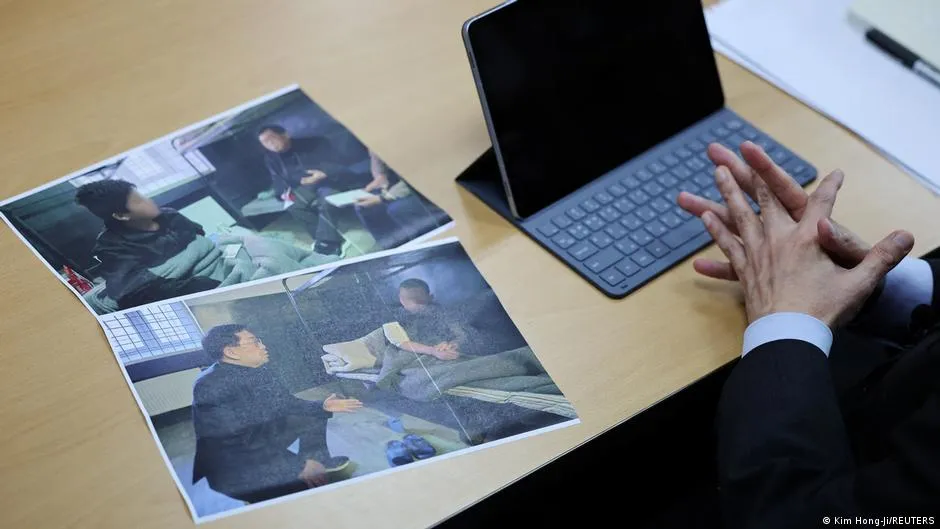 Photo: Deutsche Welle
Key points
South Korea demanded an official apology from Ukraine after President Volodymyr Zelenskyy disclosed transferring two North Korean prisoners of war to Seoul.
South Korea demanded an official apology from Ukraine after President Volodymyr Zelenskyy disclosed that Ukraine had sent two North Korean prisoners of war to the Republic of Korea. Speaking at the United Nations General Assembly on 23 September, Zelenskyy said both men, captured by Ukrainian forces during fighting in Russia's Kursk region in January 2025, had expressed a wish to resettle in South Korea.
The dispute matters because it has turned a quiet prisoner transfer into an open diplomatic rift between two countries that Kyiv hoped would become partners. South Korea's Foreign Ministry summoned Ukraine's ambassador to Seoul, Andrii Vieshkin, demanding an explanation for what it called Kyiv's "unilateral disclosure" and an official apology, despite what Seoul says was a prior agreement to keep the matter confidential.
What Zelenskyy disclosed at the UN
The two North Korean soldiers were captured in January 2025 while fighting for Russia in the Kursk region and arrived in South Korea in mid-September, according to officials cited. Zelenskyy disclosed their transfer in his address to the UN General Assembly in New York on 23 September. Both prisoners had previously expressed a wish to resettle in South Korea, Zelenskyy said in that speech.
The two governments disagree on whether a confidentiality pact existed. Dmytro Lytvyn, Zelenskyy's spokesperson, wrote on Facebook that no such agreement existed and that it was wrong to keep secret where such prisoners were transferred. South Korean presidential spokesperson Kim Sung-wan called Lytvyn's denials false, saying Ukraine had asked for confidentiality over concerns about domestic criticism if the prisoners were not swapped for Ukrainians held in Russia.
A senior South Korean foreign ministry official said there was an agreement from the outset to keep the matter confidential to protect the soldiers and their families, who remain in North Korea. Foreign Minister Cho Hyun and his Ukrainian counterpart Andrii Sybiha have been in close communication on potential responses from Ukraine, including the tone and content of the message and the manner of its announcement.
Where the numbers came from
President Lee Jae Myung accused Ukraine of disclosing the information and making him a "liar" by denying the agreement, and warned of "additional measures" if Ukraine refuses to issue an official apology. Lee also expressed regret over Ukraine's reference to an "imminent military clash between the two Koreas," saying it appeared to hope for war on the Korean Peninsula.
Sybiha described the issue as a "diplomatic misunderstanding" and expressed hope it would be resolved soon, in remarks reported by RBC-Ukraine. He said South Korea is an important country for Ukraine and that he wanted the situation resolved in the short term. Kyrylo Budanov, head of Ukraine's presidential office, said North Korea's involvement in the war was "first and foremost, to be ready for active combat operations in its own region."
The dispute plays out against South Korea's domestic politics and its constitution, under which North Koreans are considered citizens of South Korea. Opposition lawmakers have questioned why President Lee agreed to keep the transfer secret, accusing him of trying to gain favour with the North. Mykola Polishchuk, a Korea expert based in Ukraine, said Seoul knew Kyiv was going to comment on the transfer.
What happens next between Kyiv and Seoul
Nataliya Butyrska of the New Europe Center in Kyiv said Ukraine and South Korea lack a continuous, trust-based dialogue, particularly under the current government in Seoul. She said the prisoners could have been used by Ukraine to improve bilateral relations between Kyiv and Seoul, but that no one in South Korea was now thinking of thanking Ukraine for the transfer.
Shim Sangmin of the Asan Institute for Policy Studies in Seoul said South Korea had pursued the transfer for a long time, but that Seoul worried the move could hamper efforts to reestablish communication between North and South. Human Rights Watch urged South Korean President Lee Jae Myung on 1 October to ensure his diplomacy-first approach toward North Korea does not disregard accountability for human rights violations.
The two foreign ministers are still discussing how Kyiv should respond to Seoul's demand for an apology, a senior South Korean government official said on 2 October. The official said any message would take into account Ukraine's ongoing war with Russia and its high-level diplomatic considerations, while aiming to avoid broader friction between the two countries.
Frequently asked questions
Why is South Korea demanding an apology from Ukraine?
South Korea says Ukraine's president disclosed the transfer of two North Korean prisoners of war to Seoul despite a prior agreement to keep the matter confidential, and that Ukraine's office denied the agreement existed.
Who are the two North Korean prisoners of war?
They are two North Korean soldiers captured in January 2025 while fighting for Russia in the Kursk region, who arrived in South Korea in mid-September and had expressed a wish to resettle there.
What has Ukraine said in response?
Ukrainian Foreign Minister Andrii Sybiha described the issue as a diplomatic misunderstanding and said he hoped it would be resolved in the short term, calling South Korea an important country for Ukraine.
How this story was checked
- Fact-checked against 3 cited pages. 11 figures, dates and quotations in this story were found on the pages it cites.
- Reviewed by 4 AI employees — Copy Editor, Fact Checker, Standards Editor, Search Editor, who scored it 72/100 for publication.
Pages checked (3 of 3)
- dw.comread and checked
- en.yna.co.krread and checked
- hrw.orgread and checked
Written by Kaer from public reporting. Checked 2 October 2026.