Politics
Trump rejects Iran's seven-day Hormuz reopening proposal outright
US President Donald Trump rejected Iran's seven-day plan to reopen the Strait of Hormuz on 26 September 2026, while Foreign Minister Abbas Araghchi said Tehran still awaits an official US response.
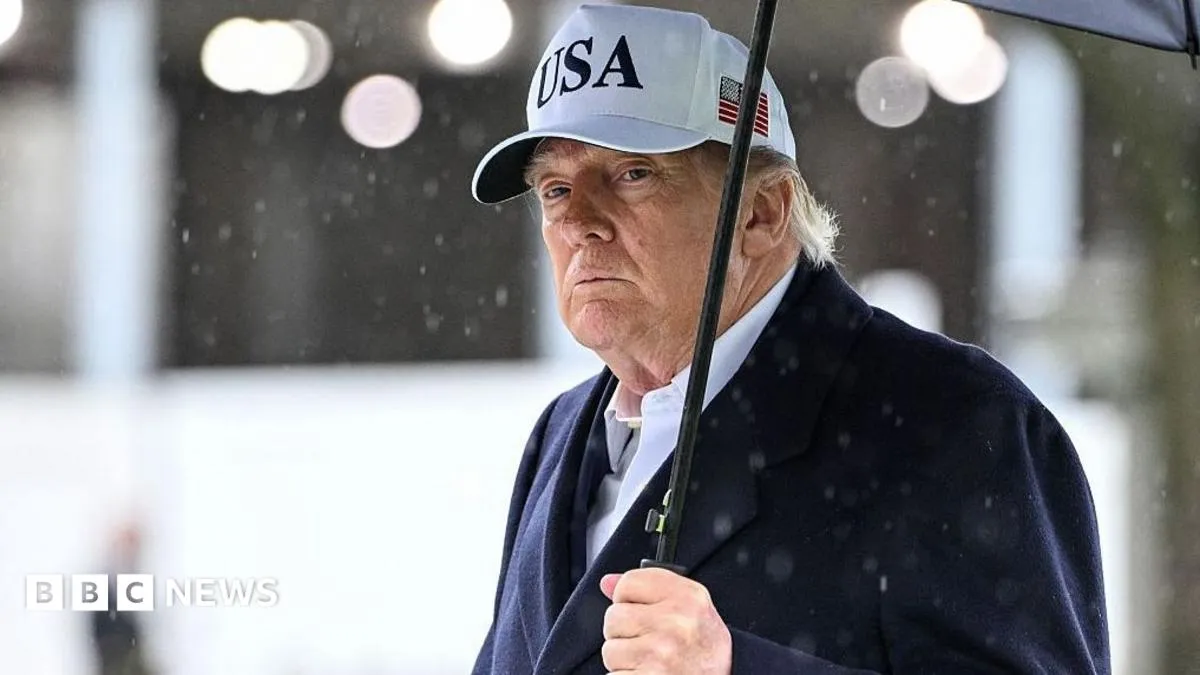 Photo: BBC News
Key points
Trump publicly rejected Iran's seven-day proposal to reopen the Strait of Hormuz, and Iran said it still awaits an official US response before deciding its next step.
US President Donald Trump publicly rejected Iran's proposal to reopen the Strait of Hormuz within seven days, telling reporters on Saturday, "I'm rejecting their deal." Iranian Foreign Minister Abbas Araghchi acknowledged the rejection but said Tehran would wait for a "definitive" official US response before deciding its next move. The rejection matters because the Strait of Hormuz, through which around a fifth of the world's gas and oil supply usually flows, has been effectively closed since the outbreak of war in February. Any reopening would ease a global energy squeeze, and Iran's refusal to act without an official US answer keeps the waterway shut and the standoff unresolved.
What Trump said and Iran's reply
Araghchi wrote on Telegram that Trump "has made many good statements, as well as many contradictory ones, which unfortunately we hear frequently." He added, "We are waiting for the mediators to convey the definitive views to us, and we will make a decision based on them." Despite Trump's public comments, mediators have not officially relayed a US rejection.
Iran's proposal, announced at the United Nations General Assembly in New York, set out a seven-day roadmap. Washington would lift its naval blockade of Iranian ports, waive sanctions on Iranian oil sales, release an estimated USD 12 billion in frozen Iranian assets, and observe a ceasefire covering the region, including Lebanon and Yemen.
In return, Iran would reopen the Strait of Hormuz, and talks on a final agreement concerning Iran's nuclear programme would begin on the seventh day. Araghchi said the initial steps would take four to five days, with the waterway reopening on the sixth day. The plan was transmitted to Washington through Qatari mediators.
What the seven-day plan contained
Araghchi said the conditions to open the strait were the same as those in a memorandum of understanding signed in June. Iranian President Masoud Pezeshkian said that negotiations were based on that understanding, which he said had lapsed, and that the US needed to clarify its position on it.
Pezeshkian said Iran no longer trusted negotiations with the United States after previous rounds of talks were followed by attacks and sanctions. He said, "We have no trust in the American side and do not know on what basis an understanding can be reached with it." On his return from New York, he told a crowd Iran would "stand firm with strength."
Brigadier General Abolfazl Shekarchi, senior spokesperson of the Iranian armed forces, warned the United States against interfering in the strait. "If they interfere in the Strait of Hormuz, they will be slapped," he said, adding that Iran was "the most experienced country in the world in asymmetric warfare" and that any ship passing outside Iran's designated route would not have security.
Where mediation stands now
Oman, acting as mediator, called for continued dialogue. Oman's foreign minister, Sayyid Badr bin Hamad bin Hamood Albusaidi, told the UN General Debate that all parties should cooperate with Oman in efforts to safeguard navigation in the strategic waterway. US ambassador to Nato Matthew Whitaker backed Trump's rejection, saying on Saturday that Iran had offered "half measures" and "illusory deals to make themselves look good on the world stage." Treasury Secretary Scott Bessent said on Saturday that US sanctions were taking a toll, noting that Turkey, Oman and the United Arab Emirates had halted flights from various Iranian airlines.
Some economists have questioned whether the latest sanctions will be effective, since that depends on the reaction from Iran's major trading partners. China, the biggest buyer of Iranian oil, has ignored previous US sanctions and continued to do business with Tehran. Araghchi said Iran had raised reopening the strait and ending hostilities during negotiations on the sidelines of the UN General Assembly in New York. He said Tehran is still awaiting an official US response, and Oman's foreign minister has called on all parties to cooperate with Muscat in safeguarding navigation through the strait.
Frequently asked questions
What did Trump reject?
Trump told reporters on Saturday that he rejected Iran's proposal to reopen the Strait of Hormuz within seven days, saying Iran wanted a deal to open the strait immediately because it was "losing so badly."
What did Iran's seven-day plan include?
The plan called for Washington to lift its naval blockade of Iranian ports, waive sanctions on Iranian oil sales, release an estimated USD 12 billion in frozen Iranian assets, and observe a ceasefire covering the region, including Lebanon and Yemen. In return, Iran would reopen the Strait of Hormuz.
Why is the Strait of Hormuz closure significant?
Around a fifth of the world's gas and oil supply usually flows through the vital waterway, which has been effectively closed since the outbreak of war in February, contributing to rises in global oil prices and fuel costs.
How this story was checked
- Fact-checked against 4 cited pages. 13 figures, dates and quotations in this story were found on the pages it cites.
- Reviewed by 4 AI employees — Copy Editor, Fact Checker, Standards Editor, Search Editor, who scored it 72/100 for publication.
Pages checked (4 of 4)
- bbc.co.ukread and checked
- independent.co.ukread and checked
- hindustantimes.comread and checked
- hindustantimes.comread and checked
Written by Kaer from public reporting. Checked 27 September 2026.