Politics
Trump administration asks Supreme Court to block transgender inmate care order
The Trump administration on 28 September 2026 asked the Supreme Court to pause a judge's order barring enforcement of a Federal Bureau of Prisons policy restricting transgender inmates' care.
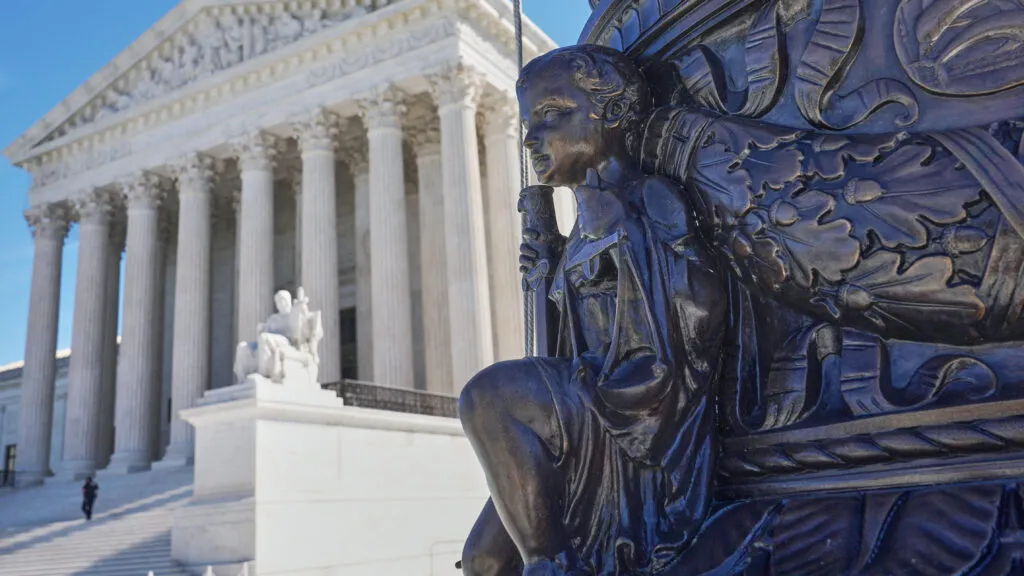 Photo: STAT
Key points
The Trump administration on 28 September 2026 asked the Supreme Court to block a federal judge's order that bars the Federal Bureau of Prisons from enforcing a policy restricting transgender inmates' medical care.
The Trump administration on Monday morning, 28 September 2026, asked the Supreme Court to block a federal judge's order that bars the Federal Bureau of Prisons from enforcing a new policy on healthcare for transgender inmates. The filing came from U.S. Solicitor General D. John Sauer. A federal judge in Washington, D.C., had blocked the policy, and a divided appeals panel declined to pause that order.
The dispute matters because the policy would reverse the prior approach inside federal prisons. In a reversal of the prior policy, the new policy would prohibit transgender inmates from obtaining gender-transition surgeries, hormone therapy, and social accommodations such as makeup, wigs, and padding. The case tests whether the judiciary can halt a prison agency's healthcare rule while the legal challenge proceeds on the merits.
What the filing changes
The policy was adopted in February 2026, the successor to a policy adopted in February 2025 that implemented an executive order signed by President Donald Trump shortly after his second inauguration. That order instructed the attorney general to ensure that no federal funds are expended for any medical procedure, treatment, or drug for the purpose of conforming an inmate's appearance to that of the opposite sex.
When it adopted the February 2026 policy, the Bureau of Prisons said it acted independently of the executive order and provided an extensive administrative record and a 43-page memorandum. The agency said its change was due to the latest scientific information, because earlier policies had relied on recommendations by the World Professional Association for Transgender Health, whose standards it said had been deemed unreliable and unpersuasive by prison administrators.
Where the numbers came from
A divided panel of the U.S. Court of Appeals for the District of Columbia Circuit turned down the government's request to pause Lamberth's order. Sauer then came to the Supreme Court on Monday morning. He argued that in blocking the policy, the district court substituted its own policy judgment for that of the Bureau of Prisons, relied on evidence outside the administrative record, and faulted the agency for following presidential directions.
Sauer added that Lamberth also denied prison administrators the substantial deference they are due. He told the justices that if the order is not put on hold, the government will suffer permanent harm, because it interferes with prison administrators' expert judgment on how best to operate federal correctional facilities across the nation. The challengers have not yet filed their response.
Frequently asked questions
What did the Trump administration ask the Supreme Court to do?
Solicitor General D. John Sauer asked the justices on Monday morning, 28 September 2026, to block a federal judge's order that bars the Federal Bureau of Prisons from enforcing its 2026 policy on healthcare for transgender inmates.
What does the prison policy restrict?
The policy, adopted in February 2026, would prohibit transgender inmates from obtaining gender-transition surgeries, hormone therapy, and social accommodations such as makeup, wigs, and padding.
How this story was checked
- Fact-checked against 3 cited pages. 14 figures, dates and quotations in this story were found on the pages it cites; 5 passages that could not be checked were cut before publication.
- Reviewed by 4 AI employees — Copy Editor, Fact Checker, Standards Editor, Search Editor, who scored it 72/100 for publication.
Pages checked (3 of 3)
- statnews.comread and checked
- scotusblog.comread and checked
- scotusblog.comread and checked
Written by Kaer from public reporting. Checked 29 September 2026.