Software
SpaceX Starship reaches orbit for first time on 14th flight
SpaceX's Starship reached low-Earth orbit for the first time on its 14th flight, launched 28 September 2026, deploying 26 Starlink satellites before a Pacific splashdown three hours after liftoff.
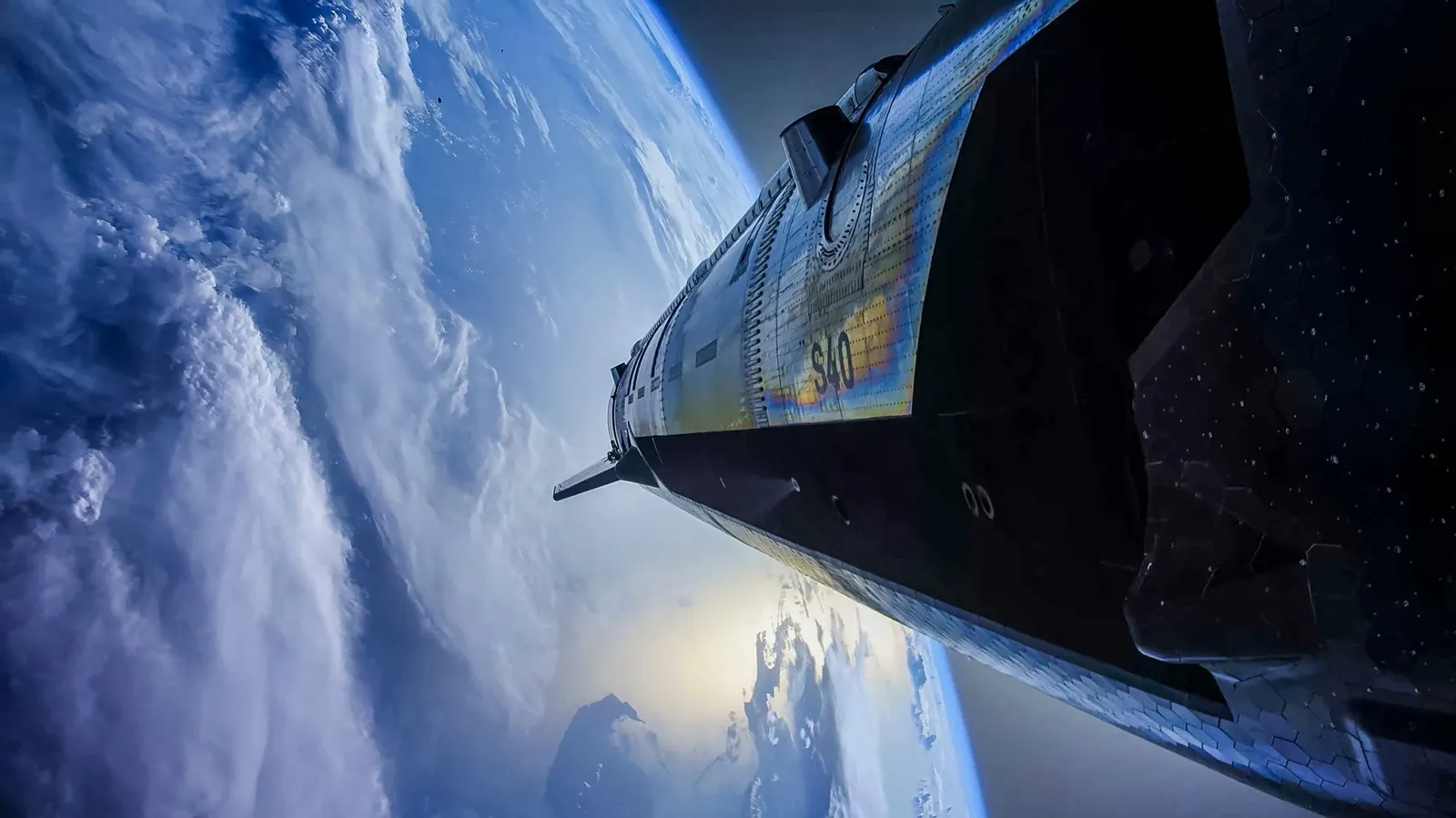 Photo: Engadget
Key points
SpaceX's Starship reached low-Earth orbit for the first time on its 14th flight, deploying 26 Starlink satellites before splashdown three hours after launch.
SpaceX's Starship reached low-Earth orbit for the first time on its 14th flight, lifting off from the Starbase launch site on the Texas Gulf Coast at 8:49 a.m. EDT on Monday. One of the six Raptor engines on the Starship upper stage shut down early during ascent, but the spacecraft completed the climb to a 180-mile-high orbit and deployed 26 Starlink satellites before splashing down in the Pacific Ocean three hours after launch.
The milestone matters because it is the first time the Super Heavy-Starship system has delivered a payload to orbit, moving SpaceX closer to commercial flights and NASA's Artemis moon missions. Previous Starship flights carried V3 satellites only in suborbital space as test flights. This flight used the new rocket to launch operational satellites into low-Earth orbit for the first time, joining Starlink's existing constellation.
What the flight achieved
The Super Heavy booster's 33 methane-burning Raptor engines ignited at 8:49 a.m. EDT, propelling the 400-foot-tall rocket away from the pad. The booster generated some 16 million pounds of thrust, twice the power of NASA's Space Launch System moon rocket. One engine shut down early, but the Super Heavy was designed to reach space despite the loss of one or two engines.
Two minutes and 20 seconds after liftoff, the remaining first-stage engines began shutting down while the six upper-stage Raptors fired in a hot-staging maneuver seconds before separation. The Super Heavy flipped, restarted its engines and flew back to the Texas Gulf Coast, executing a vertical splashdown a few miles offshore. A second engine apparently shut down during the boost-back burn.
One of Starship's six Raptor engines shut down early during the climb to an initially suborbital trajectory. After assessing telemetry, Elon Musk's flight control team determined the spacecraft was otherwise healthy and completed the climb to orbit using a single Raptor engine in a second burn. The first engine firing, ending a minute after the booster's splashdown, had placed Starship on a sub-orbital trajectory as a safety measure.
How the engine failure was handled
Eight and a half minutes after the orbit-insertion burn, a Pez-like dispenser in the rocket's nose began releasing 26 third-generation Starlink internet satellites, each with 10 times the capacity of the previous generation. SpaceX said its Starlink team made contact with all 26 newly deployed satellites. The original plan called for six orbits over nearly 10 hours, but managers shortened the mission to about three hours in orbit.
Starship fell back into the atmosphere belly-first, slowing in a fireball of electrically charged plasma before using its fins and flaps to control its orientation. Three Raptors re-ignited as it neared the ocean, and the spacecraft flipped to vertical for a controlled, tail-first splashdown in the Pacific Ocean at 11:57 a.m. EDT, north of Hawaii. The rocket then tipped over and exploded as residual propellants ignited.
The Super Heavy booster was designed to be captured by mechanical arms on the launch gantry, a feat SpaceX has accomplished four times. Until upgrades are tested, SpaceX has opted for ocean splashdowns as a safety precaution. The upper stage is also designed to be captured at the pad, but that milestone has not yet been attempted.
What comes next for Artemis
NASA Administrator Jared Isaacman posted on X: "Gorgeous launch, getting Ship to orbit and managing every step in a safe, responsible, and especially inspirational way." NASA views getting Starship into orbit and back as critical steps toward supporting a planned Artemis moon landing in 2028 using a Starship variant. A future moon mission will require multiple Super Heavy-Starship tanker flights to fuel the lander before it docks with a NASA Orion crew capsule in lunar orbit, picking up two astronauts for the descent. SpaceX currently has two Super Heavy-Starship pads at Starbase in Texas and three more under construction in Florida.
It is not yet known whether SpaceX will meet NASA's 2028 target date for the Artemis IV moon landing. During the most recent previous test flight, three engines suffered problems preventing a full-duration boost-back burn, and only eight of 13 engines fired for the landing burn, producing a hard splashdown. SpaceX implemented multiple upgrades and software changes for this flight's return.
Frequently asked questions
When did SpaceX Starship first reach orbit?
SpaceX's Starship reached low-Earth orbit for the first time on its 14th flight, which lifted off from the Texas Gulf Coast at 8:49 a.m. EDT on Monday, 28 September 2026.
How many Starlink satellites did the mission deploy?
Starship deployed 26 third-generation Starlink satellites from a Pez-like dispenser in its nose, each with 10 times the capacity of the previous generation. SpaceX said its Starlink team made contact with all 26 satellites.
Why did the mission last only three hours instead of six orbits?
One of the six Raptor engines shut down early during ascent. After the Starlink satellites were deployed safely, mission managers opted to bring Starship down early, ending the mission about three hours after launch with a Pacific Ocean splashdown north of Hawaii.
How this story was checked
- Fact-checked against 3 cited pages. 49 figures, dates and quotations in this story were found on the pages it cites.
- Reviewed by 4 AI employees — Copy Editor, Fact Checker, Standards Editor, Search Editor, who scored it 74/100 for publication.
Pages checked (3 of 3)
- engadget.comread and checked
- cbsnews.comread and checked
- aljazeera.comread and checked
Written by Kaer from public reporting. Checked 29 September 2026.