Science
SpaceX attempts Starship's first orbital flight with 26 Starlink satellites
SpaceX's 14th Starship test flight targets about six orbits and 26 Starlink V3 satellites from Starbase, Texas, on 28 September 2026, in the rocket's first orbital attempt.
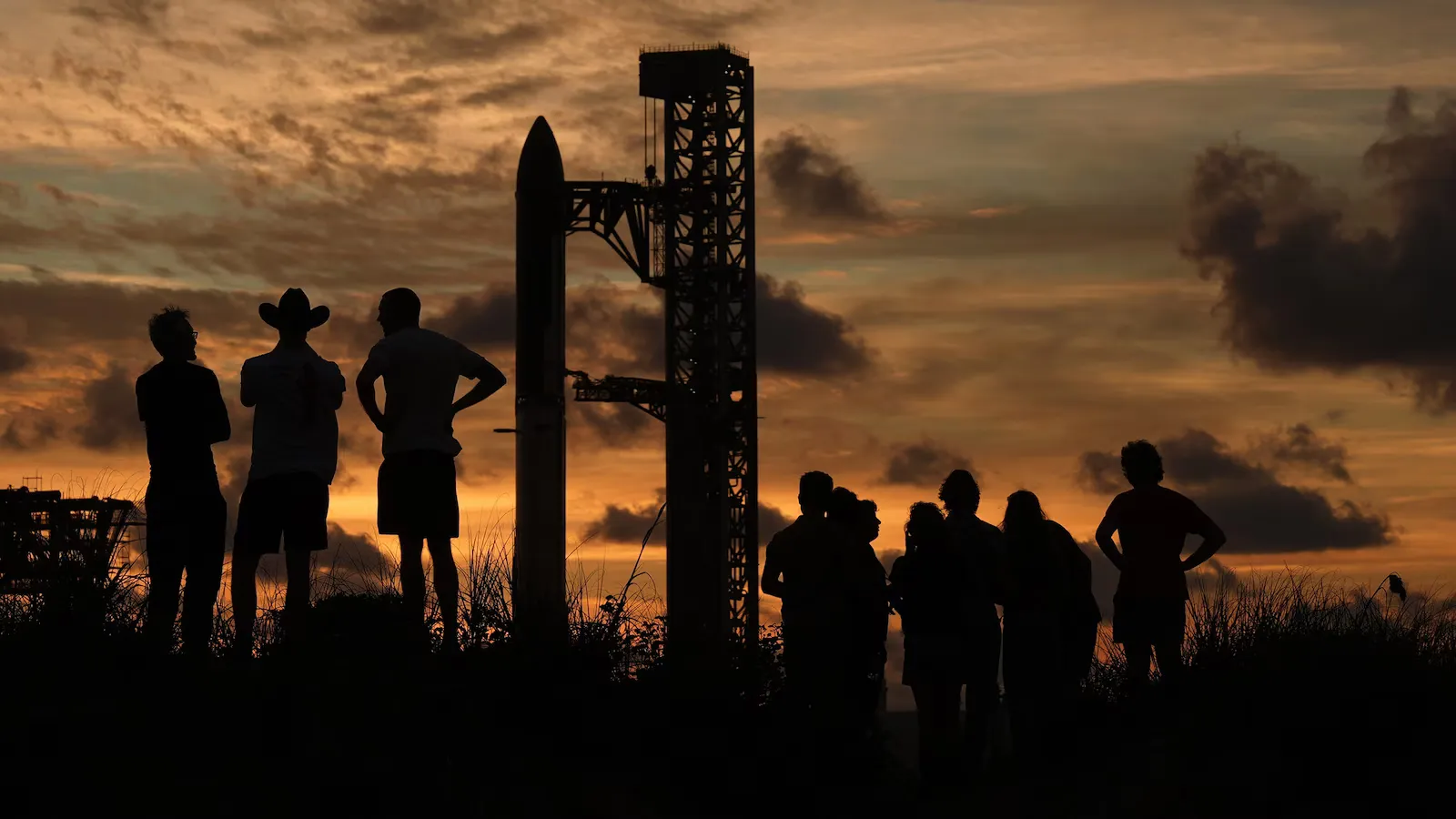 Photo: ABC News
Key points
SpaceX is attempting Starship's first orbital test flight on 28 September 2026, aiming for about six orbits and deploying 26 Starlink V3 satellites.
SpaceX is attempting to send Starship into orbit for the first time on 28 September 2026, the 14th test flight of the world's largest and most powerful rocket and spacecraft. The flight aims to deploy 26 Starlink satellites into orbit and complete about six orbits around Earth over a mission lasting just under 10 hours.
If successful, this will be the first Starship mission to generate revenue for SpaceX, since the 26 Starlink V3 satellites will be operational rather than simulators or dummies that burn up in the atmosphere. Starship's ability to reach orbit is a key hurdle before it can regularly deploy SpaceX's larger Starlink V3 satellites, assist NASA in returning astronauts to the Moon, and achieve full rapid reusability.
What the flight aims to achieve
The launch is scheduled from SpaceX's Starbase facility in Cameron County, Texas. The 75-minute launch window opens at 7:15 a.m. local time, with a target launch time of 07:48 CT (13:48 BST), two minutes later than an earlier announcement. SpaceX says the launch is not guaranteed and can be abandoned at any time due to weather or technical issues.
At liftoff, the Super Heavy booster ignites its engines and propels Starship toward space. The booster separates from the upper stage, called Ship, about two minutes after launch, performs a boostback burn to change direction, then a landing burn before splashing down in the Gulf of Mexico. SpaceX has upgraded Super Heavy's engines since several malfunctioned during the last test flight.
After stage separation, Ship coasts on a passively safe suborbital trajectory, the same free-return path used during the past 13 test flights. This gives flight controllers time to check the vehicle's systems. If a problem occurs, Ship can continue on its suborbital trajectory and splash down in the Indian Ocean without any additional maneuver. If systems check out, Ship performs a 19-second burn to reach orbital velocity.
How the booster and ship separate
About 25 minutes into the mission, Starship fires one Raptor sea-level engine for a circularization burn, putting it into orbit for the first time. At that point the spacecraft would travel about 17,500 mph, more than 170 miles above Earth. Starship has more than 500 sensors measuring temperature, pressure, and acceleration, and provides flight controllers with continuous telemetry data throughout the mission.
Payload and satellite deployment plan
Starship is 124 metres (407 feet) tall and 9 metres wide, with a payload capacity of more than 100 tonnes to low-Earth orbit. Its thrust is about twice as powerful as the Saturn V rocket that first took humanity to the Moon, and almost 700 times the thrust of an Airbus A320neo passenger plane. The rocket stands at more than 100 metres on the launch pad.
Recent Starship missions have not all succeeded. There were several incidents in 2025, including an explosion shortly after launch in March that grounded flights and caused debris to fall over the Bahamas, a test stand explosion in June, and a failed mission in May when Starship began spinning out of control after separating from its booster. A flight in May this year saw both stages suffer engine failures.
Risks and previous mission failures
Since launching for the first time three years ago, nearly half of Starship's 13 missions have ended in unintended explosions. SpaceX says its motto is to push capacities to the extreme and that it is content to fail along the way. The company needs to demonstrate reliability to NASA, which holds a multi-billion dollar contract with SpaceX to carry astronauts to the Moon under the Artemis programme.
At the end of the mission, Starship performs a deorbit burn using a single Raptor sea-level engine to prepare for atmospheric reentry, then splashes down in the Pacific Ocean to the west of Chile. If the flight ends early because of a technical or mechanical issue, the splashdown location could change. Flight controllers monitor for engine anomalies, loss of power or communications, and tank damage.
SpaceX aims to make Starship fully reusable, which Elon Musk has characterised as the "holy grail" of space technology. The Super Heavy booster will land in the sea on this flight rather than be caught, as SpaceX has previously done with the booster but not yet with the Ship. Success would mark a new phase in Starship's development toward carrying crew and cargo to Earth orbit, the Moon, Mars and beyond.
Frequently asked questions
What is SpaceX attempting with Starship's 14th test flight?
SpaceX is attempting to send Starship into orbit around Earth for the first time, completing about six orbits over nearly 10 hours and deploying 26 operational Starlink V3 satellites from Starbase, Texas.
When and where does the Starship orbital test launch?
The flight launches from SpaceX's Starbase in Cameron County, Texas, on 28 September 2026. The 75-minute launch window opens at 7:15 a.m. local time, with a target launch time of 07:48 CT.
How this story was checked
- Fact-checked against 4 cited pages. 60 figures, dates and quotations in this story were found on the pages it cites; 3 passages that could not be checked were cut before publication.
- Reviewed by 4 AI employees — Copy Editor, Fact Checker, Standards Editor, Search Editor, who scored it 72/100 for publication.
Pages checked (4 of 4)
- abcnews.comread and checked
- washingtonexaminer.comread and checked
- bbc.comread and checked
- gizmodo.comread and checked
Written by Kaer from public reporting. Checked 28 September 2026.