World
Iran tells Trump to choose war or diplomacy as talks stall
Iran's foreign minister said on Sunday the choice between renewed war and diplomacy now sits with President Trump, as Iran's UN delegation said it had no plans to negotiate on 28 September.
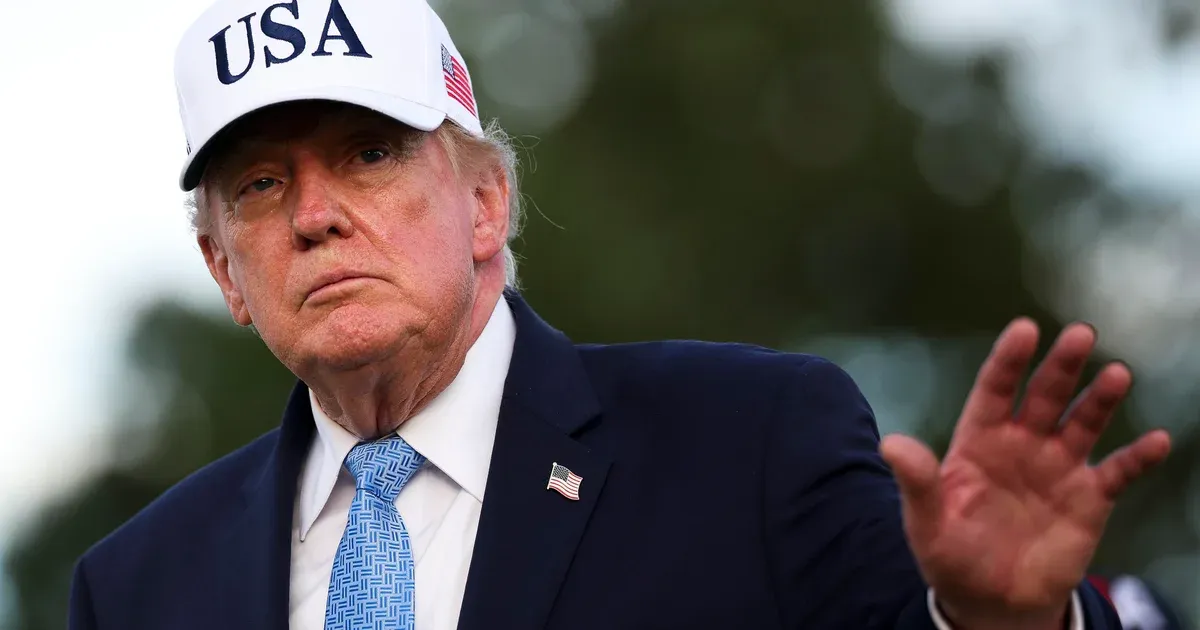 Photo: CBS News
Key points
Iran said on Sunday it is prepared for war or diplomacy and that President Trump must choose which path to take.
Iranian Foreign Minister Abbas Araghchi said on Sunday that Tehran is prepared either to resume fighting in the seven-month war or to pursue diplomacy, and that the choice now rests with President Trump. Araghchi spoke on NBC News' "Meet the Press," where he said Iran stands firm against any new aggression while remaining ready to talk. His remarks came a day after Trump rejected Iran's proposal to return to a ceasefire agreement that had collapsed months earlier.
The statement matters because it frames the coming week as a decision point rather than a negotiation round. Iran's proposal, rejected by Trump on Saturday, would have reopened the Strait of Hormuz to commercial shipping under a seven-day plan. Trump said on Sunday he expected talks to continue, but Iran's own delegation in New York said it had no plans to meet U.S. officials, leaving the two sides publicly at odds over whether negotiations are actually under way.
What Araghchi said on Sunday
Iran's delegation to the United Nations General Assembly in New York had no plans to hold direct talks with the United States, the official IRNA news agency reported on 28 September, citing a source close to the group. IRNA said Tehran's position had been conveyed to Washington through a Qatari mediator and that the delegation was due to return to Iran on Tuesday. Trump said on Sunday he expected negotiations to continue this week.
The gap between Trump's expectation and Iran's public position reflects how the two sides have communicated since the war began in February: largely through mediators rather than face-to-face meetings. Trump said he believed Iranian leaders wanted a deal because they are "losing badly." Iran has instead presented seven conditions for ending the conflict and reopening the Strait of Hormuz, including a seven-day ceasefire across the Middle East, unfreezing of Iranian assets, lifting of oil-sector sanctions, and an end to the U.S. naval blockade.
Why the talks stalled
U.S. Treasury Secretary Scott Bessent said Iran's final oil shipments to China are under way and predicted Iran would soon have nothing left to trade. Bessent said Iran's last batch of about 15 million barrels of oil is out for delivery, and that once it arrives, Iran's trade would stop because the U.S. is blockading Iranian ports under a campaign called Operation Economic Outcast. He said the operation's goal is to ensure Iran complies with any future agreement's terms.
Bessent also said the Strait of Hormuz was already effectively open, with oil flows averaging between 15 million and 22 million barrels a day, compared with around 20 million barrels a day before the conflict. Iran has said roughly 20% of global oil and gas supplies passed through the strait before the war. Tehran restricted shipping through the waterway after the February strikes, and Washington responded by imposing a blockade on Iranian ports.
The economic pressure campaign
Economic pressure inside Iran has intensified alongside the blockade. The Iranian rial fell to a new historic low against the U.S. dollar on 28 September, with the free-market selling rate surpassing 2.4 million rials per dollar, according to data from Pashizi tracked by Iran's free-market exchange rates. Annual inflation reached 61.4% in August, and food prices rose 128% from a year earlier, according to Iran's Statistical Center.
Iran has also lodged a complaint with the United Nations over U.S. sanctions against its aviation sector, which have forced the cancellation of many flights across the region. Civil aviation chief Abouzar Shiroudi said Iran submitted a formal protest to the International Civil Aviation Organisation to defend the aviation industry's rights. The U.S. imposed restrictions this month on the entire Iranian aviation industry, and as the sanctions took effect last Wednesday, major airlines cancelled international flights.
Indirect talks mediated by Qatar could take place as early as Monday, following discussions last week between U.S. envoys Steve Witkoff and Jared Kushner and Iranian Foreign Minister Abbas Araghchi. Whether those talks proceed now depends on the choice Araghchi described on Sunday: Iran says it is ready for diplomacy or resumed war, and the next signal is expected from Trump, who said he expects negotiations to continue this week.
Frequently asked questions
What did Iran say about choosing between war and diplomacy?
Iranian Foreign Minister Abbas Araghchi said on Sunday that Iran is prepared for war to resume or for diplomacy, and that the choice is up to President Trump. He spoke on NBC News' "Meet the Press."
Does Iran plan to negotiate with the United States?
Iran's delegation to the United Nations General Assembly had no plans to hold direct talks with the U.S., the official IRNA news agency reported on 28 September, citing a source close to the group.
What has the U.S. said about Iran's oil trade?
U.S. Treasury Secretary Scott Bessent said Iran's last batch of about 15 million barrels of oil is out for delivery to China, after which Iran would have nothing left to trade, given the U.S. blockade of its ports.
How this story was checked
- Fact-checked against 4 cited pages. 19 figures, dates and quotations in this story were found on the pages it cites; 3 passages that could not be checked were cut before publication.
- Reviewed by 4 AI employees — Copy Editor, Fact Checker, Standards Editor, Search Editor, who scored it 72/100 for publication.
Pages checked (4 of 4)
- cbsnews.comread and checked
- theguardian.comread and checked
- hindustantimes.comread and checked
- washingtonexaminer.comread and checked
Written by Kaer from public reporting. Checked 28 September 2026.