Science
SpaceX Crew-13 launches four astronauts from Cape Canaveral at 11:10 a.m.
A SpaceX Falcon 9 lifted four astronauts from Cape Canaveral at 11:10 a.m. EDT on 1 October 2026, bound for the International Space Station for a six-month mission.
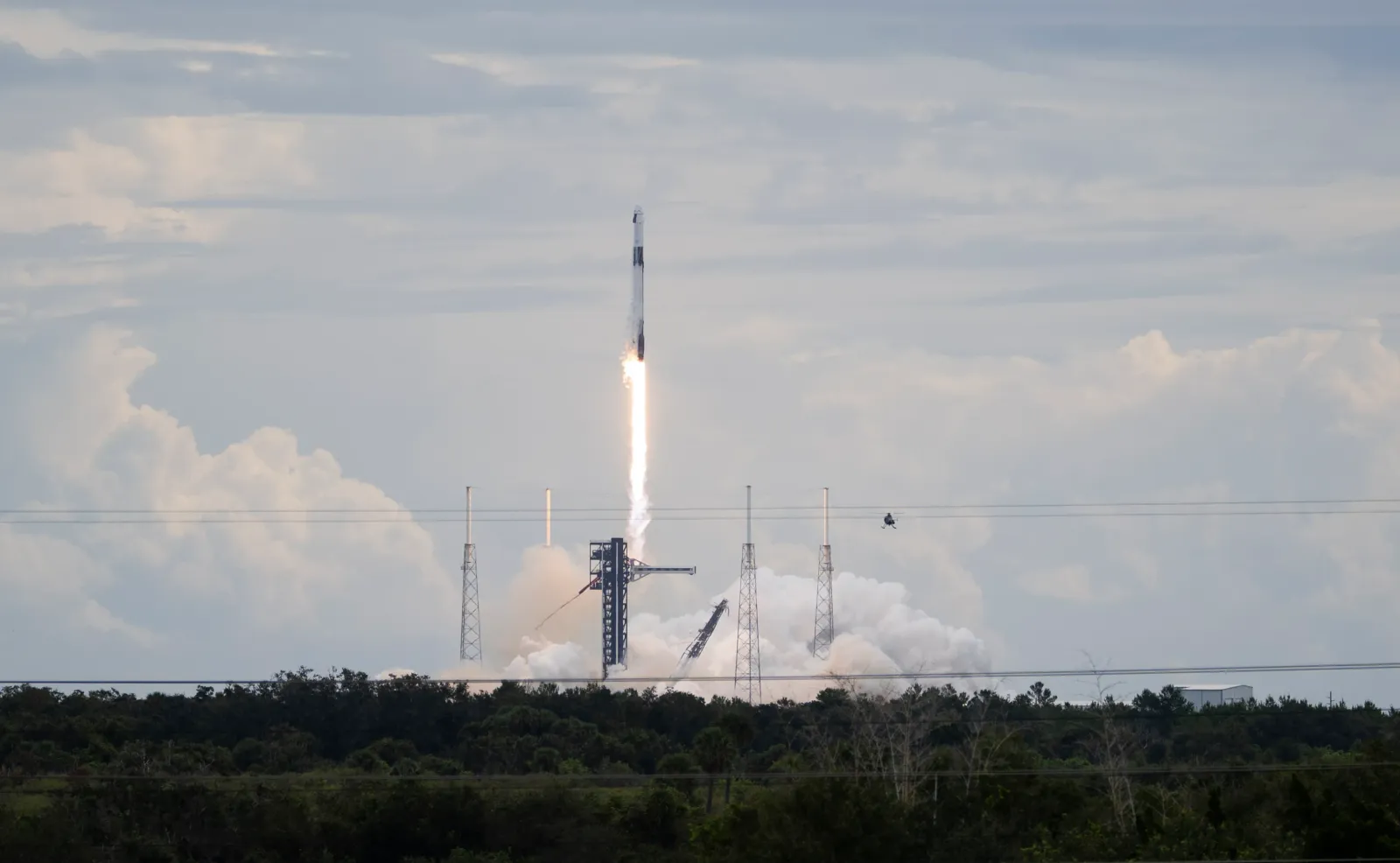 Photo: NASA
Key points
SpaceX Crew-13 launched four astronauts from Cape Canaveral on 1 October 2026 for a six-month mission to the International Space Station.
A SpaceX Falcon 9 rocket launched NASA's SpaceX Crew-13 mission at 11:10 a.m. EDT on 1 October 2026 from Space Launch Complex 40 at Cape Canaveral Space Force Station in Florida, carrying four crew members for a science expedition aboard the International Space Station. The crew comprises NASA astronauts Jessica Watkins and Luke Delaney, Canadian Space Agency astronaut Joshua Kutryk, and Roscosmos cosmonaut Sergey Teteryatnikov. The launch was originally planned for mid-September but was delayed to replace a valve in the Crew Dragon's propulsion system.
What the launch carried
The mission matters because it continues NASA's steady cadence of commercial crew launches to the orbiting laboratory. NASA Administrator Jared Isaacman said Crew-13 demonstrates capability in human spaceflight and the strength of commercial partnerships, and that the crew will carry forward work aboard the station while building experience for missions to the Moon and beyond.
Watkins commands the mission and holds a Ph.D. in geology; she flew to space aboard a Crew Dragon in 2022. Her three crewmates are space rookies, becoming the 296th, 297th and 298th astronauts to fly aboard the International Space Station. Delaney and Kutryk are former military test pilots, and Teteryatnikov served in the Russian submarine force before becoming a cosmonaut.
After boosting the rocket and capsule out of the dense lower atmosphere, the Falcon 9's first stage flew itself back to a pinpoint landing at the Space Force station while the upper stage continued the climb. Minutes later, the second stage engine shut down and the crew capsule separated to fly on its own. Delaney radioed, "What an epic ride!"
How the capsule caught up
The launch was timed for the moment Earth's rotation carried the pad into the plane of the station's orbit, a requirement because no current rocket has power to overcome orbital momentum at nearly 5 miles per second. The Falcon 9 cannot change orbital planes, but the Dragon can change altitude, flying lower and faster to catch up. It took about eight hours to reach the station.
Who swaps in and out
During its mission, Crew-13 will use microgravity to produce human stem cell-derived tissues for personalised medicine, disease modelling, and pharmaceutical testing for conditions including heart disease and Parkinson's. The crew will also explore crop production through a new mostly autonomous plant growth system and test a new inflight diagnostic device to monitor astronaut health.
Frequently asked questions
When and where did SpaceX Crew-13 launch?
Crew-13 launched at 11:10 a.m. EDT on 1 October 2026 from Space Launch Complex 40 at Cape Canaveral Space Force Station in Florida, aboard a Falcon 9 rocket carrying a Dragon spacecraft.
Who is on the Crew-13 mission?
The crew comprises NASA astronauts Jessica Watkins (commander) and Luke Delaney (pilot), Canadian Space Agency astronaut Joshua Kutryk, and Roscosmos cosmonaut Sergey Teteryatnikov, on a six-month mission.
How long did it take Crew-13 to reach the space station?
The Dragon capsule caught up with the station in about eight hours, docking autonomously at the forward port of the Harmony module shortly after 7 p.m. ET.
How this story was checked
- Fact-checked against 4 cited pages. 48 figures, dates and quotations in this story were found on the pages it cites; 5 passages that could not be checked were cut before publication.
- Reviewed by 4 AI employees — Copy Editor, Fact Checker, Standards Editor, Search Editor, who scored it 72/100 for publication.
Pages checked (4 of 4)
- nasa.govread and checked
- nasa.govread and checked
- cbsnews.comread and checked
- cbsnews.comread and checked
Written by Kaer from public reporting. Checked 2 October 2026.