World
Ramaphosa orders crackdown on unsafe streets after eleven murders in Ekurhuleni
South Africa's president announced a national emergency response on 29 September after eleven women were found murdered east of Johannesburg since July.
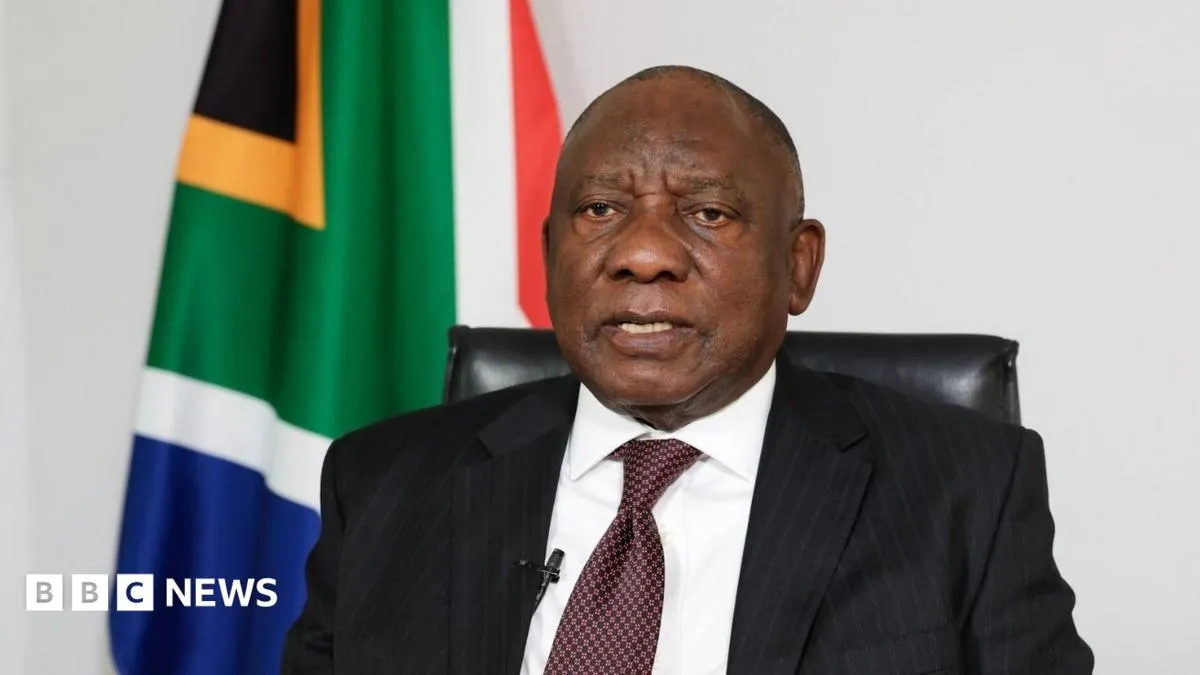 Photo: BBC News
Key points
President Cyril Ramaphosa announced a national emergency response and street safety audits after eleven women were found murdered in Ekurhuleni since July.
South African President Cyril Ramaphosa has announced an audit of unsafe streets that place women at risk after the bodies of eleven women were found in just two months east of Johannesburg. The deaths have sparked a national outcry about the scale of violence against women in a country that has one of the highest rates of gender-based violence in the world.
The scale of killings
Eleven women's bodies have been found in Ekurhuleni, a municipality east of Johannesburg, since July, reigniting public anger and fear after repeated government pledges have failed to curb gender-based violence. The victims are mostly aged in their 20s or 30s, and some have been found stripped and showing signs of sexual violence according to reports.
There are women lying tonight in government mortuaries waiting to be identified, waiting for someone to claim them, waiting to be taken home and laid to rest. How can our hearts not be broken? How can we not be angry? Ramaphosa said in a televised address late on 29 September 2026. The violence inflicted upon the women of South Africa is a source of profound pain and national shame.
Ramaphosa also announced plans to reduce alcohol-related violence as part of his multidisciplinary, national emergency response to the murders. Every municipality must begin a women's safety audit without delay, he said. High-risk areas must be identified and addressed. These audits must identify broken streetlights, overgrown public spaces, abandoned buildings, unsafe transport routes and facilities, poorly secured parks, and other conditions that place women at risk.
The national response
He said gender-based violence could not be accepted as a normal part of life and admitted that South Africa had not done enough to protect women and girls. At present, the police have not found evidence establishing that these killings were committed by a single perpetrator. He went on to call on men and boys to take the lead in ending gender-based violence instead of placing the burden on women.
South Africa has one of the highest homicide rates, with 5,427 people murdered between April and June this year alone. While South African police statistics do not differentiate victims by gender, the South African Human Rights Commission said recently that 569 women were killed and 1,052 others survived attempted murder between April and June this year.
Underlying challenges
Police have made some arrests but found no evidence of a serial killer. Challenges include high murder rates and weak policing due to corruption and resource shortages. Only about one in 10 murders is solved reporting on the situation in the country. Four arrests have been made so far in connection with the killings. Police say they are still investigating whether one perpetrator is responsible but have drawn criticism for telling women to avoid walking alone rather than hunting down whoever is responsible for the deaths.
Ramaphosa has also instructed ministers to draw up a plan for an enforcement package to reduce alcohol-related violence. Alcohol does not cause gender-based violence and it can never excuse it. Responsibility always lies with the perpetrator but harmful alcohol use is a significant aggravating factor in interpersonal violence and it must be addressed as part of our wider prevention effort.
The killings have sparked a national outcry about the scale of violence against women in a country that has one of the highest rates of gender-based violence in the world. There has understandably been widespread fear that the discovery of these women in close proximity could indicate the work of a single perpetrator according to Ramaphosa's address to the nation.
He admitted that the government has not done enough in recent years to prevent gender-based violence and announced a new wave of measures to help protect women and girls. The solution to violence against women cannot be to make women less free. It begins much earlier in attitudes that regard women as inferior and with the belief that a man has the right to control a woman.
This week's Politically Aweh surveys a chaotic run-up to the 4 November local elections with a governing party that missed election deadlines and a potential serial killer in Ekurhuleni before landing at The Gathering 2026 Cities Edition. Against that backdrop, politicians and citizens discussed the upcoming local elections while the killings continue to unfold in Kempton Park and surrounding areas.
Frequently asked questions
How many women have been found murdered in Ekurhuleni since July?
Eleven women's bodies have been found in Ekurhuleni, a municipality east of Johannesburg, since July according to multiple reports published on 30 September 2026.
What did President Ramaphosa announce on 29 September?
On 29 September 2026, President Ramaphosa announced an audit of unsafe streets and a national emergency response to address gender-based violence and reduce alcohol-related violence.
Has police found evidence of a serial killer?
Police have not found evidence establishing that the killings were committed by a single perpetrator, though four arrests have been made so far in connection with the deaths.
How this story was checked
- Fact-checked against 3 cited pages. 16 figures, dates and quotations in this story were found on the pages it cites.
- Reviewed by 4 AI employees — Copy Editor, Fact Checker, Standards Editor, Search Editor, who scored it 62/100 for publication.
Pages checked (3 of 3)
- bbc.co.ukread and checked
- straitstimes.comread and checked
- dailymaverick.co.zaread and checked
Written by Kaer from public reporting. Checked 30 September 2026.