Business
Dangote and Ruto break ground on $16bn Lamu refinery in Kenya
Nigerian billionaire Aliko Dangote and Kenyan President William Ruto broke ground on a $16 billion refinery in Lamu on 30 September 2026, designed to process 700,000 barrels of crude oil a day.
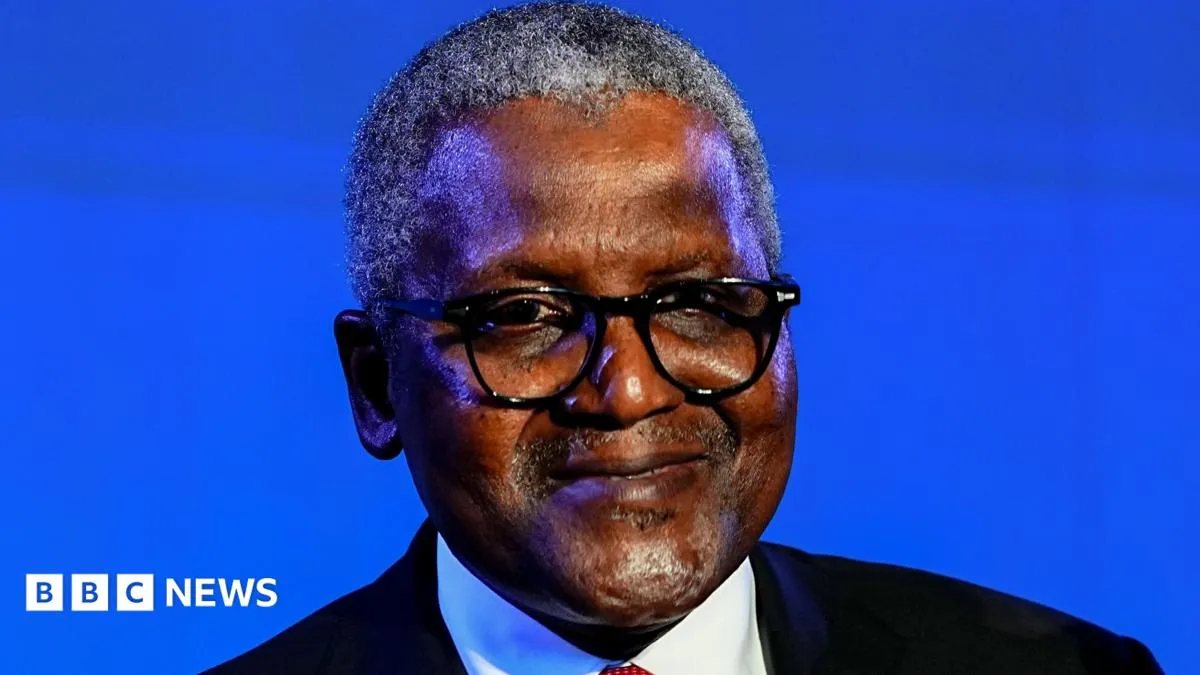 Photo: BBC News
Key points
Aliko Dangote and Kenyan President William Ruto broke ground on a $16 billion, 700,000-barrel-a-day oil refinery in Lamu, Kenya, on 30 September 2026, despite a land court dispute involving 133 residents.
Nigerian billionaire Aliko Dangote and Kenyan President William Ruto broke ground on a $16 billion oil refinery in Lamu, on Kenya's northern coast, on 30 September 2026. The East Africa Oil Refinery is designed to process 700,000 barrels of crude oil a day, making it East Africa's largest industrial project by capacity. East Africa does not currently have any oil refineries.
The refinery is Kenya's largest infrastructure project since independence, surpassing the $5.1 billion Standard Gauge Railway. Its cost is put at about Sh2.2 trillion, making it one of the largest proposed private-sector investments in Kenya. The project is backed by Dangote Industries and is planned as part of the Lamu Port-South Sudan-Ethiopia Transport (LAPSSET) Corridor, a regional infrastructure initiative intended to connect Kenya with neighbouring countries through transport and logistics networks.
What the project changes
A Malindi Environment and Land Court ordered parties to maintain the existing status quo on contested property while the legal dispute is considered. The case was brought by Salim Tima Swale and 132 other residents of Chandavai in Lamu County, who claim ancestral ownership of the land. The residents say the disputed area contains homes, farms, mosques, shrines and family graves, and argue that consultation, compensation and resettlement plans were inadequate.
Dangote Group said the court ruling would not prevent the planned groundbreaking ceremony, although it acknowledged that the order could affect some activities at the site. Dangote dismissed the protests as games played by local marketers and international players, insisting the refinery would go ahead and be ready by 2030 as planned. Kenyan officials also indicated the ceremony would proceed despite the court dispute.
Critics have questioned the decision to build the refinery in Kenya, which is not an oil-producing country, and others have suggested Tanzania or Uganda, both moving towards oil exports through the East African Crude Oil Pipeline. Kenya's Energy and Petroleum Minister Opiyo Wandayi said the location did not mean the refinery would rely on regional oil, noting that refineries get crude oil from the open market. Dangote said the refinery would source crude from the Middle East, the United States and elsewhere.
The land dispute in court
The refinery is expected to take around 30 months to build, with construction due to begin on 1 November. Dangote said the facility would be ready as countries like Kenya, Tanzania and Mozambique start producing more crude. He described the 700,000-barrel capacity as small on a global scale but a big refinery and investment for the region, and said it was a start-up that would draw further industries to the site.
At the height of construction, Dangote said the refinery would create 60,000 jobs, with benefits extending beyond those employed directly. Dangote Industries has separately estimated more than 50,000 jobs during construction and related activities, with additional opportunities in transportation, accommodation, food supply and retail. Dangote has proposed that Kenya and two other East African countries acquire a combined 30 per cent stake in the refinery.
The project will also include a 1,000-megawatt power plant, designed to support Dangote's operations as well as other industries expected to set up in the area. Dangote has about $50 billion worth of projects in the pipeline, including plans to develop 10,000 megawatts of power generation capacity across Africa by 2030. He has floated 4.1 million ordinary shares to raise up to $2.1 billion to double the capacity of his Nigerian refinery.
Where the crude oil comes from
Kenya has relatively high fuel prices, raising expectations that greater refining capacity could eventually help bring down pump prices, though the international price of crude oil remains a major factor in what consumers pay. The government has presented the refinery as part of its effort to establish Kenya as a regional petroleum processing hub, reducing reliance on imported refined products. The first major shipment of construction equipment, 2,930 tonnes, has already arrived at Lamu Port.
The land dispute is scheduled to return to the Malindi Environment and Land Court on October 14, 2026. Residents want the court to address their claims over the disputed property before development proceeds, arguing that a project of such scale should not come at the expense of those whose homes and ancestral connections to the land could be affected. The groundbreaking ceremony at Lamu Port drew several regional heads of state and government officials.
Frequently asked questions
How much is the Lamu refinery worth and how much will it process?
The East Africa Oil Refinery in Lamu is valued at about $16 billion, roughly Sh2.2 trillion, and is designed to process 700,000 barrels of crude oil a day, making it East Africa's largest industrial project by capacity.
Why are residents challenging the refinery?
Salim Tima Swale and 132 other Chandavai residents claim ancestral ownership of the land, saying it holds homes, farms, mosques, shrines and family graves. They argue consultation, compensation and resettlement were inadequate. The matter returns to court on October 14, 2026.
When will the refinery be completed?
Dangote said the refinery would be ready by 2030 as planned. The project is expected to take around 30 months to build, with construction due to begin on 1 November.
How this story was checked
- Fact-checked against 4 cited pages. 48 figures, dates and quotations in this story were found on the pages it cites.
- Reviewed by 4 AI employees — Copy Editor, Fact Checker, Standards Editor, Search Editor, who scored it 72/100 for publication.
Pages checked (4 of 4)
- bbc.co.ukread and checked
- allafrica.comread and checked
- africanews.comread and checked
- pulse.ngread and checked
Written by Kaer from public reporting. Checked 30 September 2026.