World
Hurricane Polo makes landfall in Mexico with 185 km/h winds
Hurricane Polo struck Baja California Sur on 28 September 2026 with winds near 185 km/h, cutting power, flooding a fishing port of nearly 6,000 people and opening 169 shelters.
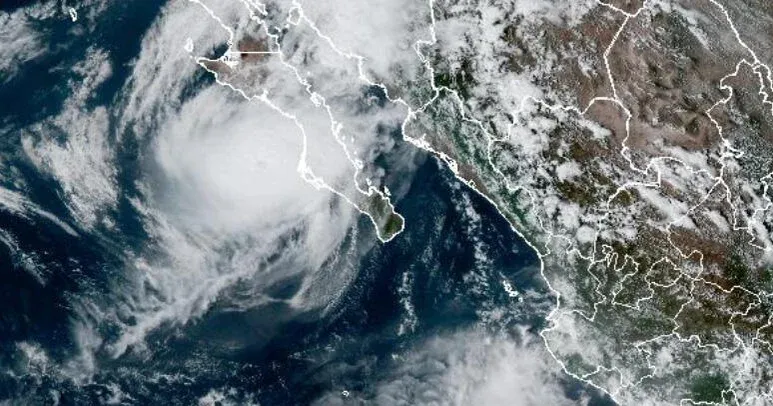 Photo: CBS News
Key points
Hurricane Polo made landfall on Mexico's Baja California Sur on 28 September 2026 as a Category 3 storm with winds near 185 km/h, cutting power and flooding coastal towns.
Hurricane Polo came ashore over Mexico's Baja California Sur state on the evening of 28 September 2026, packing sustained winds of 185 km/h as a Category 3 storm. The National Hurricane Center warned of "life-threatening winds and flash flooding now beginning" across the region. Power was cut to part of the Baja California peninsula as the storm bore down on the Pacific coast, and the sea breached coastal defences, causing flooding in towns along Polo's path.
Polo is the first hurricane of the 2026 Pacific season to make landfall, and it arrived turbo-charged by the El Niño weather phenomenon, which has caused unprecedented warming in the equatorial Pacific. El Niño raises surface temperatures in the central and eastern Pacific Ocean and causes global changes in winds and rainfall. Meteorologists said extremely warm waters fuelled the storm as it moved slowly toward Mexico's coastline, producing conditions forecasters warned would deteriorate quickly.
What the landfall changed
The storm's forecast track carried its eye inland along the coast of Baja California Sur on the evening of 28 September, then into southern Sonora on the morning of 29 September. The National Hurricane Center expected Polo to lash mainland Mexico as a hurricane early on 29 September before weakening. A hurricane warning covered parts of Baja California Sur's coasts and the mainland from Bahia Kino to Huatabampito, with a hurricane watch for other stretches south of Huatabampito to Topolobampo.
Flooding was already visible before the centre arrived. In Puerto San Carlos, a small fishing port of nearly 6,000 people in Baja California Sur state lying in Polo's path, the sea had breached several sections of a sand barrier, sending water pouring into the street reporters. The town's power supply was cut and palm trees swayed violently. Some 169 shelters were opened across Baja California Sur for residents told to take shelter.
Polo's power came from an unusual burst of growth. The storm underwent extreme rapid intensification between 21 and 22 September, a category in which winds rise by 58 mph or more over 24 hours. Its winds climbed from 45 mph on the morning of 21 September to 150 mph around the same time the following day. The National Hurricane Center called the transformation "truly remarkable."
How the storm intensified
At its peak, Polo's maximum sustained winds reached 180 mph, far above the 157 mph threshold for Category 5, the strongest rating on the hurricane scale. Its central pressure made it the second-strongest hurricane on record in the Eastern Pacific, behind 2015's Hurricane Patricia, while its wind speeds tied 2009's Hurricane Rick as third-strongest for the region. Unusually strong El Niño conditions this year have been raising tropical cyclone activity in the Pacific.
Mexican authorities prepared for the impact on a large scale. The military deployed nearly 7,000 troops in Baja California Sur, where classes were suspended and public servants were ordered to work from home where possible. Laura Velazquez, National Coordinator of Civil Protection, said all maritime activities and beach access were suspended in the area. The federal authorities also deployed thousands of navy and army members with specialised machinery.
Local officials reinforced those measures. The regional government of Baja California Sur ordered schools closed on 28 September as a preventive step, and Governor Víctor Manuel Castro Cosío said temporary shelters had been opened should residents need to be evacuated. In Cabo San Lucas, authorities restricted beach access and some restaurants closed. The head of Mexico's meteorological service, Fabian Vazquez, said storm surges and heavy rains could cause "very severe" damage.
Where the flooding hit
Residents faced a hard choice about where to ride out the storm. Shopkeeper Maria Palomino, 57, was preparing to shelter on a mattress on the floor at a high school near the sea in Puerto San Carlos, saying it was better to be among people she knew. Margarita Diaz and her family stayed at home behind windows sealed only with blue masking tape. A passing police officer said he believed the whole town should have been forced to evacuate.
Forecasters warned the danger would outlast the landfall. Heavy rains could produce life-threatening flooding and mudslides, especially in steep terrain, and even after Polo dissipates, its remnants could bring strong gusty winds to southern New Mexico and western Texas. In the United States, flood watches covered 11 states and more than 14 million Americans faced the risk of major flooding, with 3 to 6 inches of rain possible from Arizona to Texas.
What happens next
Beyond Polo, the 2026 Pacific hurricane season is shaping up as more severe than usual, driven by a Super El Niño that has brought historic droughts and flooding. Meteorologists are monitoring Tropical Storm Rachel, also brewing in the Pacific off Mexico, which could strengthen into a hurricane. Fabian Vazquez said Rachel will move parallel to Mexico's coast all week but could start moving toward Baja California Sur toward the weekend.
Frequently asked questions
When and where did Hurricane Polo make landfall?
Hurricane Polo came ashore over Mexico's Baja California Sur state on the evening of 28 September 2026 as a Category 3 storm with sustained winds of 185 km/h, according to the National Hurricane Center.
How strong did Hurricane Polo get before landfall?
Polo's maximum sustained winds reached 180 mph at its peak, above the 157 mph Category 5 threshold, and its central pressure made it the second-strongest hurricane on record in the Eastern Pacific behind 2015's Hurricane Patricia.
What damage did Hurricane Polo cause in Mexico?
Power was cut to part of the Baja California peninsula, the sea breached sand barriers in Puerto San Carlos causing street flooding, and authorities opened 169 shelters across Baja California Sur while deploying nearly 7,000 troops.
How this story was checked
- Fact-checked against 3 cited pages. 62 figures, dates and quotations in this story were found on the pages it cites.
- Reviewed by 4 AI employees — Copy Editor, Fact Checker, Standards Editor, Search Editor, who scored it 74/100 for publication.
Pages checked (3 of 3)
- cbsnews.comread and checked
- bbc.co.ukread and checked
- straitstimes.comread and checked
Written by Kaer from public reporting. Checked 29 September 2026.