Politics
Burnham tells Labour conference Britain has been on the wrong path
Prime Minister Andy Burnham used his first party conference speech in Liverpool on 29 September to confirm a £2 bus fare cap in England from January and a National Care Service in the next parliament.
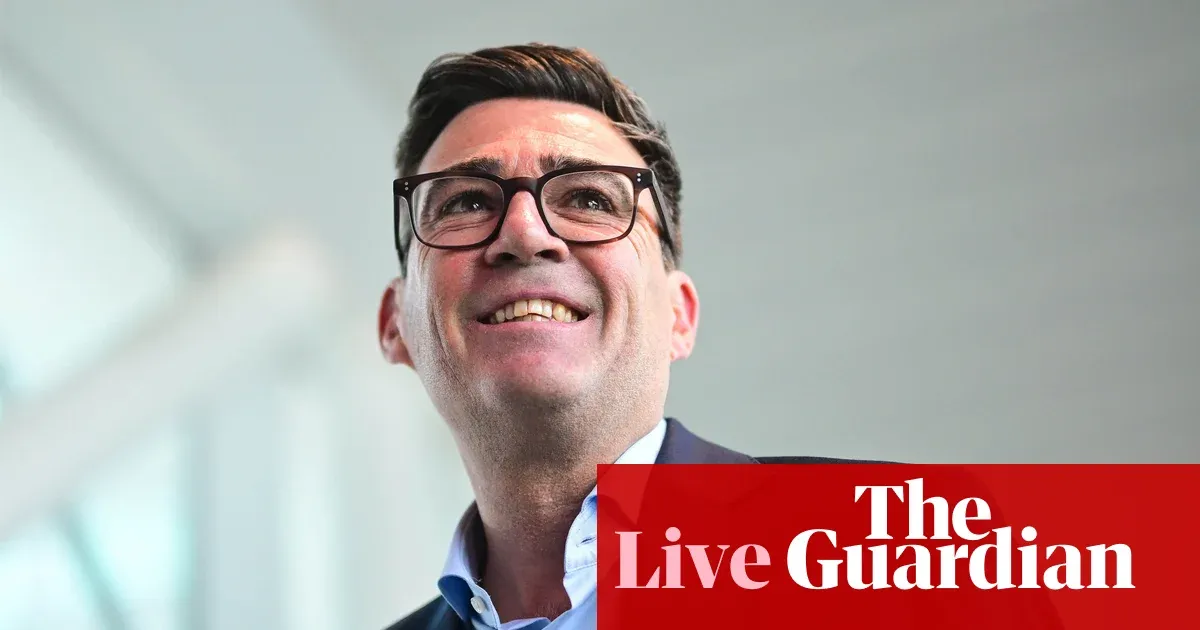 Photo: The Guardian
Key points
Andy Burnham delivered his first party conference speech as prime minister on 29 September, pledging a National Care Service, a £2 bus cap and cheaper bills.
Andy Burnham delivered his first speech to the Labour Party conference as prime minister in Liverpool on 29 September, telling delegates that Britain had been on the wrong path for a long time. Speaking at the party's annual conference, Burnham set out pledges on electricity bills, bus fares, water and social care while warning that he had to be honest about what the country can afford.
The speech matters because it is Burnham's first chance to set out a governing programme since replacing Keir Starmer as prime minister in July. He is the country's seventh prime minister in a decade and has been in the role for only a few months. He faces pressure to offer detailed plans beyond the immediate cost-of-living measures he announced when he took office, including capping bus fares and removing value added tax from electricity bills.
What the speech promised
Burnham told the conference that politics as usual had taken Britain backwards and that more of the same would not get the country where it needed to be. He said hope comes from honesty and from saying the things politicians usually avoid. He blamed deindustrialisation, deregulation, privatisation, austerity and Brexit for a country run for vested interests rather than the public interest, with power held in too few hands.
Burnham confirmed that from Thursday, value added tax will be taken off electricity bills, and that from January, bus journeys in England will be capped at £2. He said these cuts, announced when he became prime minister, were a signal of intent to get bills and fares down, but added that there is a limit to what the government can do and that he would stick to fiscal rules to get borrowing and debt down.
On social care, Burnham set out plans for a National Care Service that would be free at the point of use, with no care charges paid out of the basic state pension. He said the ground would be laid now and the service introduced in the next parliament, with Louise Casey's review advising on detail. He called it as significant as the creation of the National Health Service.
Care, housing and water pledges
On housing, Burnham said Angela Rayner will lead the biggest council building programme since the end of the post-war period. He said more than a million people are on housing waiting lists, almost exactly the same number as the homes lost through Right to Buy in the 1980s. He pledged to reform Right to Buy, removing it from newly built homes, and to give councils power to take over empty homes.
On water, Burnham confirmed that Angela Eagle will present a strengthened water bill to parliament, with the repeal of Margaret Thatcher's ban on public ownership of water as its centrepiece. He said the bill would strengthen public control, give mayors new powers to hold water companies to account and close loopholes used to pay excessive bonuses.
The scale of the pledges runs against the country's public finances. Early on 29 September, Britain paid its highest 10-year borrowing cost since 1999 to sell new debt, part of a global rise in yields. Burnham has also pushed back his plan for social care reform, saying he will now present it ahead of the next general election, scheduled for 2029.
The fiscal limits he set
Critics say Burnham's wider strategy lacks detail and could prove economically unfeasible. Sam Richards, chief executive of the campaign group Britain Remade, described the Great British Grid, a publicly owned body Burnham announced late on Monday to speed grid connections, as a sideshow. Burnham said he wants Britain's energy costs in line with other European nations within 10 years.
Labour faces political pressure from Reform UK and Restore Britain on the right and the Green Party on the left, after severe local and regional election defeats in May. Lucy Powell, deputy Labour leader, said the government was committed in this parliament to the pensions triple lock, which guarantees a state pension rise each year by whichever is highest among inflation, wage growth or 2.5%.
The Labour conference runs from 27 to 30 September at the Arena Convention Centre in Liverpool, with Burnham's speech on 29 September forming the centrepiece of the week. He said his plan to reshape governance in Britain would be a long-term one spanning a 10-year period, and that he accepted people would not agree with every part of it.
Frequently asked questions
What did Andy Burnham announce in his first conference speech as prime minister?
Burnham confirmed that VAT will be taken off electricity bills from Thursday, that bus fares in England will be capped at £2 from January, and that Angela Eagle will present a strengthened water bill repealing the ban on public ownership of water.
When will the National Care Service be introduced?
Burnham said the ground would be laid now for a National Care Service, free at the point of use, and that it would be introduced in the next parliament, with Louise Casey's review advising on the detail.
What fiscal constraints did Burnham acknowledge?
Burnham said he had to be honest about what the country can afford and would stick to fiscal rules to get borrowing and debt down. Early on 29 September, Britain paid its highest 10-year borrowing cost since 1999 to sell new debt.
How this story was checked
- Fact-checked against 3 cited pages. 26 figures, dates and quotations in this story were found on the pages it cites.
- Reviewed by 4 AI employees — Copy Editor, Fact Checker, Standards Editor, Search Editor, who scored it 68/100 for publication.
Pages checked (3 of 3)
- theguardian.comread and checked
- dw.comread and checked
- dailymaverick.co.zaread and checked
Written by Kaer from public reporting. Checked 29 September 2026.