Politics
Trump administration cuts fuel economy rules to 34.9 mpg by 2031
The Transportation Department on 28 September 2026 finalised rules requiring fleets to reach about 34.9 miles per gallon by model year 2031, down from a 50.4 mpg Biden target.
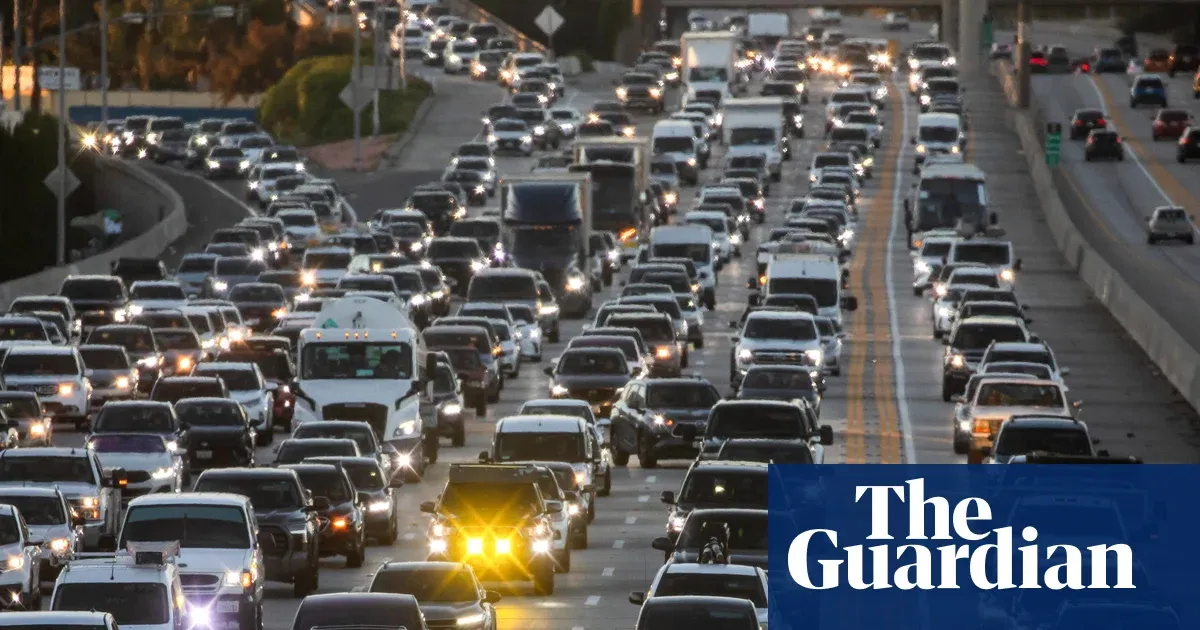 Photo: The Guardian
Key points
The Trump administration finalised rules on 28 September 2026 lowering required fleet fuel economy to about 34.9 miles per gallon by model year 2031, down from a Biden-era 50.4 mpg goal.
The Trump administration on 28 September 2026 finalised rules weakening federal fuel efficiency standards for cars and light trucks, requiring fleets to reach about 34.9 miles per gallon by model year 2031. The 892-page rule from the National Highway Traffic Safety Administration covers model years 2022 through 2031 and replaces a Biden-era goal of 50.4 miles per gallon by 2031.
The change matters because transportation is the largest source of climate emissions in the United States, accounting for about 28% of total US greenhouse gas emissions according to the US Environmental Protection Agency. The rule reverses the Biden administration's push to accelerate the transition to electric vehicles and lowers the baseline for future administrations to build on.
What the final rule changes
Under the new standards, NHTSA is estimating a fleet average fuel economy of about 34.9 miles per gallon by model year 2031. That is a modest increase from the average in 2024 of about 30.1 miles per gallon, but it falls far short of the 50.4 miles per gallon the Biden rules would have required by 2031. The revised rules require carmakers to make fleets up to 1% more fuel efficient each year.
Model years 2022 through 2026 have already been released and some model year 2027 cars and trucks have already rolled off production lines, so in practice the rule will largely affect new cars beginning with the 2028 model year. The Biden administration had increased required fuel efficiency for cars by 8% annually for model years 2024 and 2025, 10% for 2026 and 2% annually from 2027 to 2031.
The Transportation Department said its updates to the standards will reduce the average cost of a new vehicle by $1,300 and save consumers an estimated $138 billion over the next five years. The administration's own projections in the final rule show Americans will spend, on average, more than $1,600 extra on gas over the life of these less-efficient vehicles, according to the Environmental Defense Fund, which cited NHTSA's regulatory impact analysis.
Where the cost estimates come from
The fuel prices in the administration's analysis never exceed $3.30 per gallon, far lower than the average $4.48 per gallon Americans are paying, the. AAA put the national average price for gasoline close to $4.50 a gallon and diesel close to $6.50, just short of the previous week's record high. The December proposal was estimated to cut average new vehicle costs by $930 each.
Transportation Secretary Sean Duffy said: "Thanks to President Trump's leadership, we have finally ended the illegal mandate that forced automakers to produce more expensive electric vehicles that American families didn't want." The initiative is called Freedom Means Affordable Cars. Donald Trump said on Truth Social the less stringent mileage requirements would "take the waste out of building cars in America".
John Bozzella, president and chief executive of the Alliance for Automotive Innovation, said the standards finalised under the previous administration "effectively required a switchover to electric vehicles that was out of step with market realities and customer demand" and called the final rule "an appropriate course correction". Shares of Tesla Inc. dropped after the announcement.
Who supports and opposes the rule
Dan Becker of the Center for Biological Diversity said the final rule "ignores the feasibility of clean technology and the millions of fuel-efficient cars already on the road". Harold Wimmer of the American Lung Association said the rule will "create more air pollution, harm health and accelerate climate change".
Economist Sue Helper of Case Western Reserve University said easing the standards is "very bad in the long term, because it slows progress" and makes US auto companies less competitive. Katherine García of the Sierra Club vowed the group would fight the rule. Republicans zeroed out civil penalties for automakers' noncompliance with the standards in a July 2025 budget reconciliation package, and the rule eliminates automaker credit trading for electric vehicles.
The final rule follows a December proposal to retroactively revise down the 2022 model year standard and raise it between 0.25% and 0.5% annually through 2031. That proposal was estimated to increase fuel consumption by about 100 billion gallons through 2050, fuel spending by $185 billion and carbon dioxide emissions by about 5%. A future presidential administration could change the rules again.
Frequently asked questions
What did the Trump administration change about fuel economy standards?
On 28 September 2026 the Transportation Department finalised an 892-page rule requiring fleets to reach about 34.9 miles per gallon by model year 2031, down from a Biden-era target of 50.4 miles per gallon.
How much will the new rules save or cost drivers?
The Transportation Department projects the rule cuts the average new vehicle cost by $1,300 and saves consumers $138 billion over five years. The Environmental Defense Fund says drivers will spend about $1,600 more on gas over the life of the vehicles.
When will drivers notice the change?
Model years 2022 through 2026 have already been released, so the rule will largely affect new cars beginning with the 2028 model year.
How this story was checked
- Fact-checked against 4 cited pages. 91 figures, dates and quotations in this story were found on the pages it cites.
- Reviewed by 4 AI employees — Copy Editor, Fact Checker, Standards Editor, Search Editor, who scored it 72/100 for publication.
Pages checked (4 of 4)
- theguardian.comread and checked
- rollcall.comread and checked
- wgcu.orgread and checked
- edf.orgread and checked
Written by Kaer from public reporting. Checked 28 September 2026.