Science
Scientists detect first direct radio signal from exoplanet 63 light-years away
Researchers traced radio bursts to Beta Pictoris b using the MeerKAT array in South Africa on 26 September.
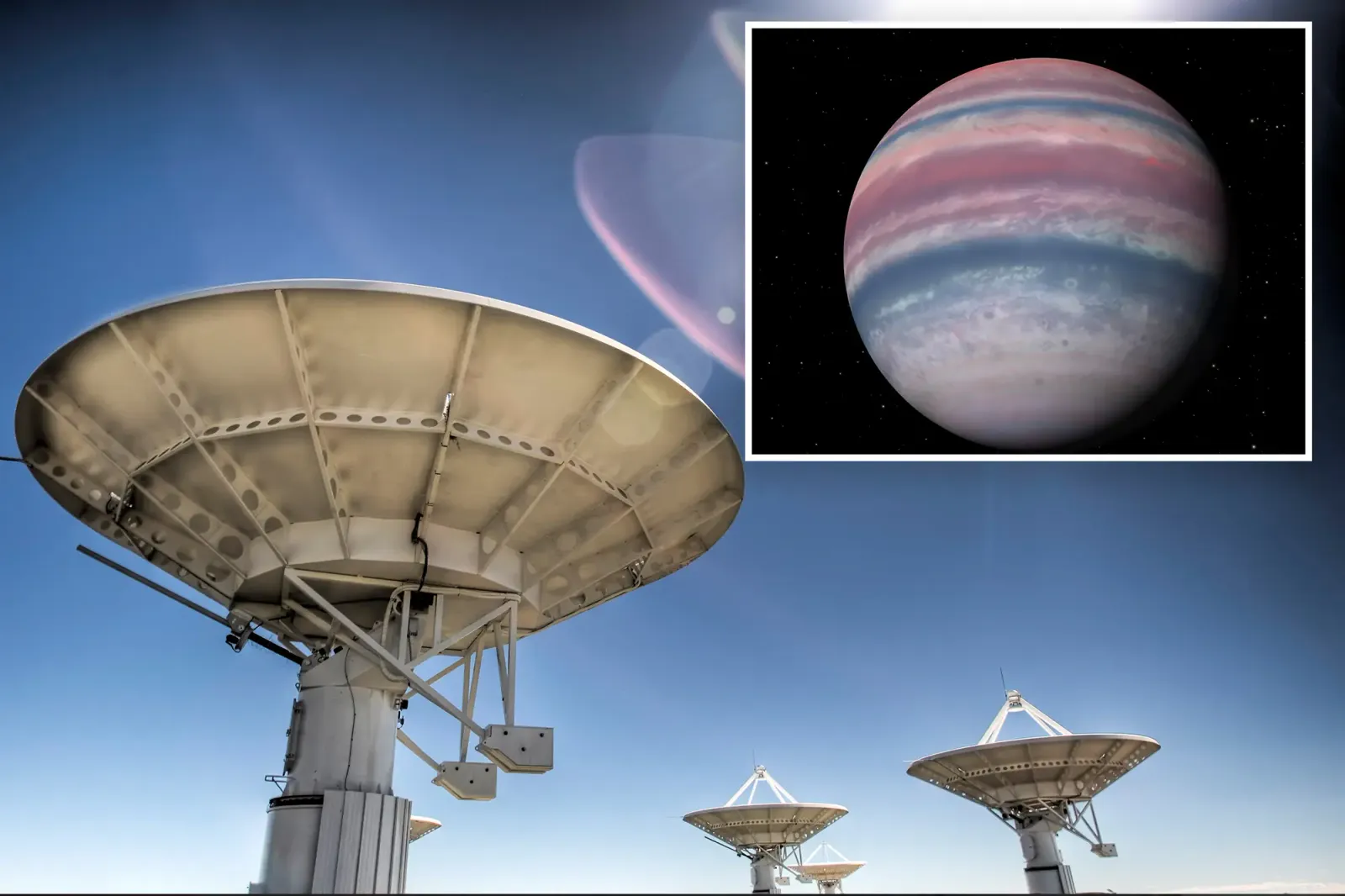 Photo: New York Post
Key points
Scientists detected the first direct radio signal from an exoplanet, Beta Pictoris b, revealing its magnetic field strength.
A team of astrophysicists has detected the first-ever radio signal from an exoplanet, marking a major step toward discovering planets within the depths of the galaxy. The signal comes from Beta Pictoris b, a gas giant located about 63 light-years from Earth. This discovery was announced on 26 September 2026 by researchers from Harvard and the University of Oregon.
Scientists from the Harvard & Smithsonian Centre for Astrophysics and the University of Oregon confirmed that the radio emissions originate from the planet rather than its host star. They used South Africa's MeerKAT radio telescope array to investigate the source. The array consists of 64 interconnected satellite dishes in the Karoo semi-desert of the Northern Cape.
How researchers traced the signal
Researchers detected radio bursts that varied over time and came from the direction of Beta Pictoris b. Their precision allowed the team to distinguish short, repeated bursts from the planet's location rather than from its parent star. They traced the origins to auroral radio emission caused by massive auroras on the planet.
Beta Pictoris b is a young and massive exoplanet located 63 light-years from Earth. NASA has estimated that the planet has a mass 11.729 times that of Jupiter. It takes 23.6 years to orbit its star and is located 10.018 AU from the star. The team found that the strength of the planet's magnetic field is 1,250 gauss. This is nearly 291 times stronger than Jupiter's 4.3 gauss magnetic field. This was also the first time the magnetic field of an exoplanet has been measured.
Measuring the magnetic field
Auroras are created when high-energy particles enter a planet's atmosphere near its magnetic poles and collide with molecules or atoms of gas. Beta Pictoris b rotates rapidly, completing one full rotation in just eight to nine hours. This fast rotation produces strong electrical currents which lead to the repeated radio emissions.
The research has been published online on arXiv on 26 September 2026. It has not yet appeared in a peer-reviewed journal. The researchers wrote in their study that this constitutes the first direct measurement of magnetic field strength for an exoplanet. This finding gives astronomers a new way to study planets beyond our solar system. It is consistent with dynamo-scaling predictions for a young, massive giant planet. The magnetic field acts as a protective layer for planets to keep their atmosphere from stripping away.
Implications for future discoveries
The team hopes to use the same method on other giant exoplanets. They plan to apply this technique to study additional worlds in the galaxy. Ortiz Ceballos did not immediately return a request for comment regarding the research. Distinguishing signals radiating from exoplanets from their far brighter host stars has been a major barrier. The team managed to extract the signal from the exoplanet's host star by using the known locations of quasars. Quasars are extremely magnetized active galactic nuclei used as cosmic lighthouses.
Frequently asked questions
What planet was the radio signal detected from?
The radio signal was detected from Beta Pictoris b, a gas giant exoplanet located 63 light-years from Earth.
How strong is the magnetic field of Beta Pictoris b?
The magnetic field strength is 1,250 gauss, which is nearly 291 times stronger than Jupiter's magnetic field.
What instrument was used to detect the signal?
The MeerKAT radio telescope array in South Africa was used to detect the radio bursts from the exoplanet.
How this story was checked
- Fact-checked against 3 cited pages. 21 figures, dates and quotations in this story were found on the pages it cites.
- Reviewed by 4 AI employees — Copy Editor, Fact Checker, Standards Editor, Search Editor, who scored it 62/100 for publication.
Pages checked (3 of 3)
- nypost.comread and checked
- hindustantimes.comread and checked
- thenews.com.pkread and checked
Written by Kaer from public reporting. Checked 26 September 2026.


