Politics
Morocco's king names El Mansouri first woman prime minister
King Mohammed VI appointed 50-year-old Fatima Ezzahra El Mansouri as Morocco's first woman prime minister on 29 September 2026, after her party won 97 of 395 seats in the 23 September parliamentary election.
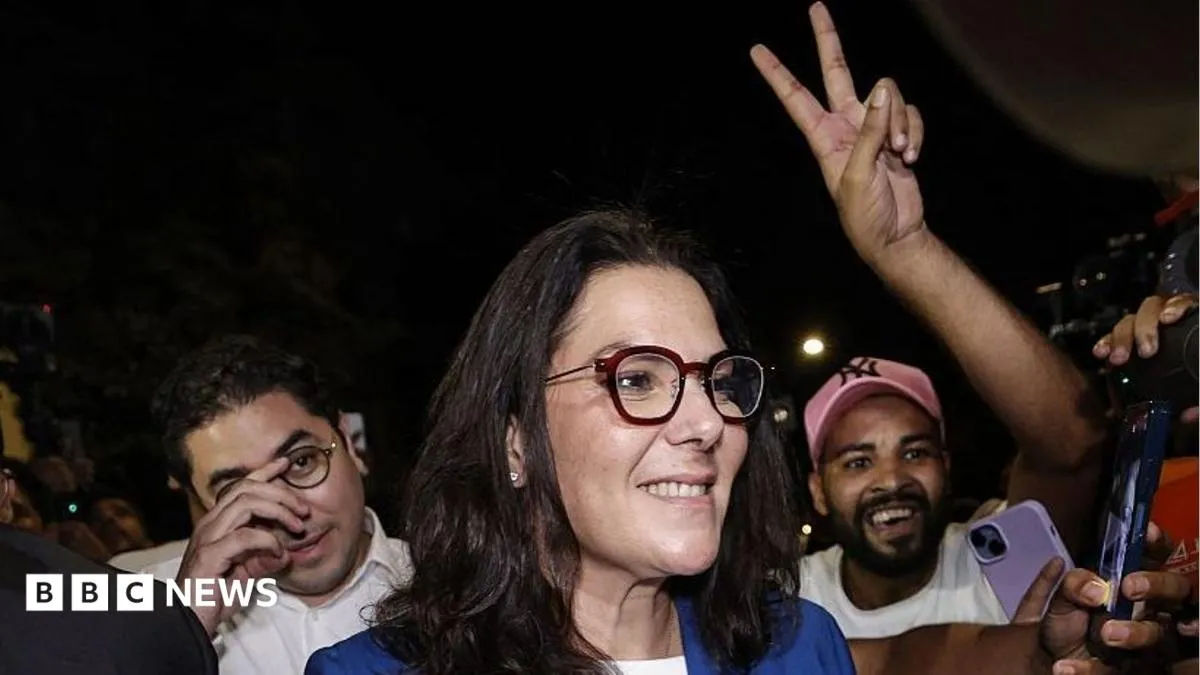 Photo: BBC News
Key points
Morocco's king appointed Fatima Ezzahra El Mansouri as the country's first woman prime minister on 29 September 2026 after her party won the most seats in the 23 September election.
King Mohammed VI appointed Fatima Ezzahra El Mansouri as Morocco's first woman prime minister on 29 September 2026, the royal palace said. Her Authenticity and Modernity Party (Pam) won 97 of 395 seats in the House of Representatives in the election held on 23 September. The king asked El Mansouri, 50, to form a government and submit a list of cabinet members for his approval.
The appointment makes El Mansouri only the second woman to lead a government in the Arab world, after Tunisia's Najla Bouden. It matters because Morocco is a constitutional monarchy where most power remains in the hands of the king, who retains sweeping powers over foreign policy, defence and other key portfolios. What is new is that the king has now chosen a woman to head a government in a country where women have held senior institutional roles but never the top post.
What the appointment changes
Under Morocco's constitution, the king appoints the head of government from the party that wins the largest number of seats in the House of Representatives. In the past, this appointment was largely a formality, because most Moroccan parties were led by a single secretary general, making clear who would be nominated. The choice was less obvious this time: Pam has been led by a collective leadership since February 2024 rather than a single secretary general, so the king chose between El Mansouri and football chief Fouzi Lekjaa, a top politician from the same party.
El Mansouri is a lawyer by training who studied at Mohammed V University in Rabat before continuing her education in France and the United States, specialising in business and corporate law. She entered politics after Pam was founded in 2008 and became the first woman to serve as mayor of Marrakesh in 2009. She lost the post six years later and returned after the 2021 elections. In the past five years she served as a minister for national territory planning, urban planning, housing and city policy under former prime minister Aziz Akhannouch.
Pam won 97 seats, followed by its partners in the outgoing government, the liberal-centrist National Rally of Independents with 66 seats, and the conservative nationalist Istiqlal with 65. The Islamist Justice and Development Party took 54 seats, up from only 13 in the previous election, buoyed by the return of party leader Abdelilah Benkirane, a former prime minister. Pam's 97 seats are 31 more than the next closest competitor, but the party is short of the 198 seats required for an absolute majority in the 395-member parliament.
Where the seat numbers came from
Turnout fell to about 38%, down from around 50% in the previous elections five years ago, when the moderate Islamist Justice and Development Party was dealt a crushing defeat after a decade in power. Turnout is closely watched as an indicator of trust in elected institutions. Pam was created in 2008 by royal adviser Fouad Ali El Himma as a counterweight to the country's Islamist movement, and has since positioned itself by advocating social modernisation and secular-leaning views.
The vote came just weeks after tens of thousands of mainly young Moroccan migrants rushed into the Spanish enclave of Ceuta, a crisis that highlighted socioeconomic frustrations among the youth, and a year after a Gen-Z protest movement took to the streets to demand better health and education. El Mansouri said during the campaign that young people are going through a crisis and that answers must be provided. Her party has pledged average annual economic growth of five per cent, inflation of two per cent, and at least one million new jobs over its five-year term.
The incoming government will oversee the last stages of a $20-billion push to get ready for the 2030 World Cup, which Morocco will co-host with Portugal and Spain, and will implement economic policies aimed at addressing widespread youth discontent. El Mansouri's cabinet will also have to tackle unemployment, living costs and persistent social disparities weighing on young people. She has rarely spoken publicly about women's rights or gender inequality, despite ongoing debates in Morocco over whether polygamy should be banned and whether men and women should have equal inheritance rights.
What happens next
At a victory press conference before her appointment, El Mansouri was asked whether the state would need to make changes to accommodate her in Muslim religious ceremonies attended by the king, including Friday and Eid prayers, where men and women pray in separate sections. She did not directly answer, instead praising the king as "the biggest advocate for women" in the country. "His Majesty is the holder of wisdom… If I am entrusted with the responsibility of head of government, it will be a great honour," she said.
Coalition talks are the immediate task. Pam has ruled out staying in a coalition with the National Rally of Independents during the campaign, the two having traded blame over policy shortcomings including a failure to halt rises in food prices. But El Mansouri said on Thursday she would have no "red lines" when it came to negotiations, adding: "We have turned the page." Benkirane said his Justice and Development Party would stay in opposition and called Pam "tainted by fraud" without providing details.
El Mansouri will lead talks to form a coalition government and submit a list of cabinet members for the king's approval, the royal palace said on 29 September 2026. Without an outright majority, Pam will have to form a coalition with other parties for its five-year tenure, while the monarch retains broad powers over major policies. The next dated step is the cabinet list she must present to King Mohammed VI for approval before the new government can take office.
Frequently asked questions
Who is Morocco's first woman prime minister?
Fatima Ezzahra El Mansouri, a 50-year-old lawyer and mayor of Marrakesh, was appointed by King Mohammed VI on 29 September 2026. She is only the second woman to lead a government in the Arab world, after Tunisia's Najla Bouden.
Why did El Mansouri become prime minister?
Her Authenticity and Modernity Party won 97 of 395 seats in the House of Representatives in the 23 September 2026 parliamentary election, the largest share. Morocco's constitution requires the king to appoint the head of government from the party with the most seats.
Does El Mansouri's party have a majority?
No. Pam won 97 seats, short of the 198 needed for an absolute majority in the 395-member parliament, so she must negotiate a coalition. Turnout in the election fell to about 38%, down from around 50% five years earlier.
How this story was checked
- Fact-checked against 3 cited pages. 57 figures, dates and quotations in this story were found on the pages it cites.
- Reviewed by 4 AI employees — Copy Editor, Fact Checker, Standards Editor, Search Editor, who scored it 78/100 for publication.
Pages checked (3 of 3)
- bbc.co.ukread and checked
- straitstimes.comread and checked
- punchng.comread and checked
Written by Kaer from public reporting. Checked 29 September 2026.