World
High Court injunction halts Drumcree parade on Garvaghy Road
Belfast's High Court granted an interim injunction on 26 September 2026 stopping the Orange Order's Drumcree parade along Portadown's Garvaghy Road scheduled for Sunday 27 September.
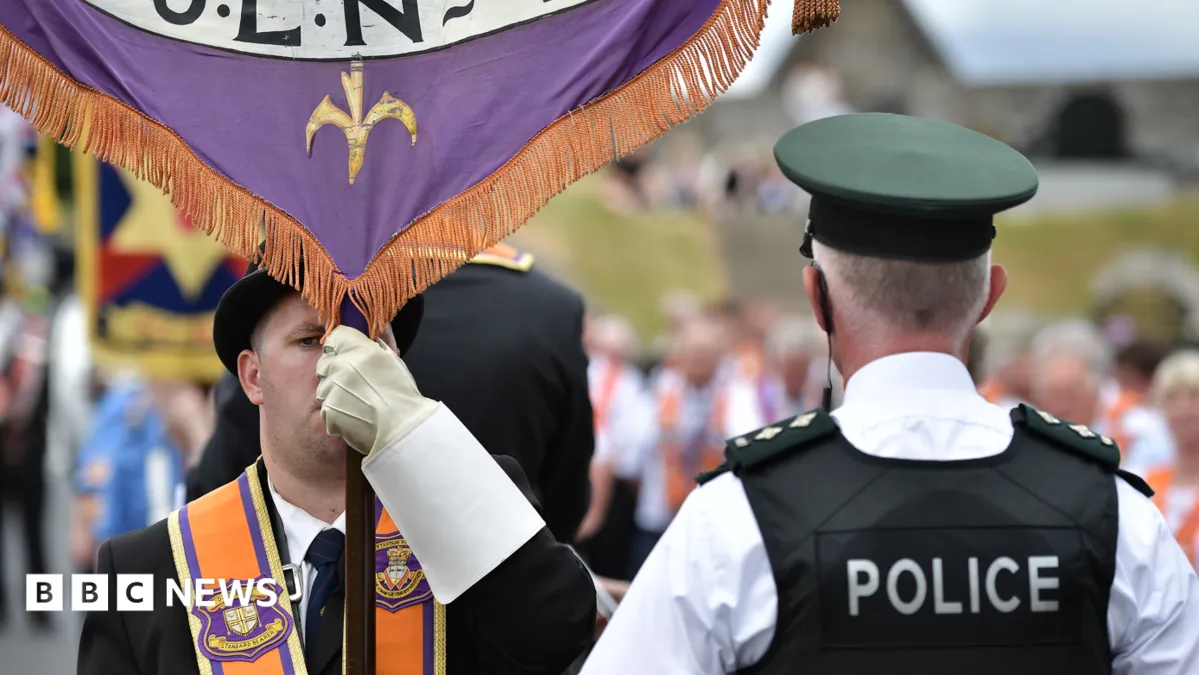 Photo: BBC News
Key points
Belfast's High Court granted an interim injunction on 26 September 2026 stopping the Orange Order's Drumcree parade along Garvaghy Road on Sunday 27 September.
Belfast's High Court granted an interim injunction on 26 September 2026 stopping the Orange Order's Drumcree parade from marching along the mainly-nationalist Garvaghy Road in Portadown on Sunday 27 September. Phoenix Law Belfast, acting for the Garvaghy Road Residents' Coalition, confirmed the court granted interim relief stopping the Orange march down Garvaghy Road tomorrow, Sunday.
The injunction reverses a decision the Parades Commission announced on Friday, which had allowed the parade to proceed on Sunday for the first time in almost 30 years. That determination reopened a dispute the residents' coalition said had effectively been settled for almost three decades, and it prompted the coalition to mount a legal challenge in the High Court in Belfast on Saturday morning.
What the injunction stops
The Parades Commission's Friday determination set tight conditions rather than a full march. The procession was to depart no later than 08:00 instead of the intended 13:00 BST start, with 35 participants rather than the 60 the Orange Order requested, no bands and no supporters, and only one banner while on Garvaghy Road. It had to leave Drumcree Church by 8am and disperse by 9.30am.
The commission said its decision related specifically to this application and should not be seen as a victory for one side or a defeat for the other. Commissioners also said they recognised that the timings set out in the determination should allow the church service at St John the Baptist, which begins at 08:30 on Sundays, to proceed as normal.
Judge Patricia Smyth heard the challenge across five adjournments on Saturday. She asked whether the Portadown District Orange Lodge would agree not to proceed 'for a matter of days' to allow an informed judgment, and the lodge submitted a two-page letter to the court. The judge indicated there was 'no agreement' to delay the march.
How the court reached it
Judge Smyth said the issues at stake were 'so sensitive and so important' that she expected all lawyers to be creative and to use the law for the good of the people of Northern Ireland. She also urged the parties to 'reach agreement for the sake of everyone in Northern Ireland' and to 'be big enough to step back from the abyss'.
The residents' legal team questioned the police assessment behind the ruling. Their counsel told the High Court it was unclear whether the Police Service of Northern Ireland's assessment referred to in the determination was the entirety of what police told the Parades Commission, and asked for the full assessment plus past assessments. Counsel also said there had been a 'significant change' in the commission's approach.
The restrictions the commission set
The Garvaghy Road Residents' Coalition separately applied to the Parades Commission for a counter-protest involving about 5,000 participants, proposed to run from 7am to 11am and 1pm to 4pm on Sunday, 27 September. The application was listed on the commission's website and was due to be considered on Saturday. The dispute has deep roots. The Parades Commission formally banned the Orange Order from marching along the Garvaghy Road in June 1998, and the order refused to accept it. Around 1,000 British troops and 1,000 RUC officers were deployed, and there were 2,561 public order incidents between 4th and 14th July, including 615 attacks on security forces, 632 petrol bombs thrown and 467 vehicles damaged.
The 1998 crisis culminated in the murder of three young Catholic brothers, Richard, Mark and Jason Quinn, whose home in Ballymoney was firebombed. Their deaths caused widespread revulsion and helped end the mass mobilisation surrounding Drumcree, and the Orange parade was never again permitted to travel along the Garvaghy Road until the Friday determination.
Political figures reacted before the injunction. UK Prime Minister Andy Burnham said he understood there would be 'concern across Northern Ireland' and appealed for leaders to 'work calmly' through the weekend. Sinn Féin leader Mary Lou McDonald called the decision 'utterly reckless', while DUP MP Carla Lockhart said nationalist residents on the road have 'nothing to fear' from the march.
Ulster Unionist Party leader Jon Burrows, speaking at his party conference, said politicians should encourage calm heads and calm words and respect, and that any determination should be respected lawfully and peacefully, with issues taken to court. He said the Parades Commission was flawed and that its commissioners should be replaced, leaving every decision vulnerable to legal challenge.
Archbishop Eamon Martin, leader of the Catholic Church in Ireland, called for prayers and support for a peaceful resolution to the Garvaghy Road situation, saying he shared the 'sense of shock and disappointment of so many people'. Fr Peter Clarke of St John the Baptist said he was concerned the march was 'going to clash' with parishioners and had emailed the commission.
Frequently asked questions
Why did the High Court stop the Drumcree parade?
Belfast's High Court granted an interim injunction on 26 September 2026, stopping the Orange Order's march along Garvaghy Road on Sunday 27 September, after the Garvaghy Road Residents' Coalition challenged the Parades Commission's Friday determination allowing the parade.
What restrictions had the Parades Commission set?
The commission allowed the parade to depart no later than 08:00 with 35 participants instead of the 60 requested, no bands, no supporters, one banner on Garvaghy Road, leaving Drumcree Church by 8am and dispersing by 9.30am.
When was the Garvaghy Road parade last permitted before this?
The Parades Commission formally banned the Orange Order from marching along the Garvaghy Road in June 1998, and the parade was never again permitted to travel that route until the commission's determination on Friday.
How this story was checked
- Fact-checked against 3 cited pages. 50 figures, dates and quotations in this story were found on the pages it cites.
- Reviewed by 4 AI employees — Copy Editor, Fact Checker, Standards Editor, Search Editor, who scored it 68/100 for publication.
Pages checked (3 of 3)
- bbc.co.ukread and checked
- thejournal.ieread and checked
- belfastlive.co.ukread and checked
Written by Kaer from public reporting. Checked 26 September 2026.


