Politics
Alito recuses from Supreme Court climate case before 5 October argument
Justice Samuel Alito will not participate in Suncor Energy v. Boulder County, argued on 5 October, after Consumer Watchdog flagged his holdings in ConocoPhillips and Phillips 66.
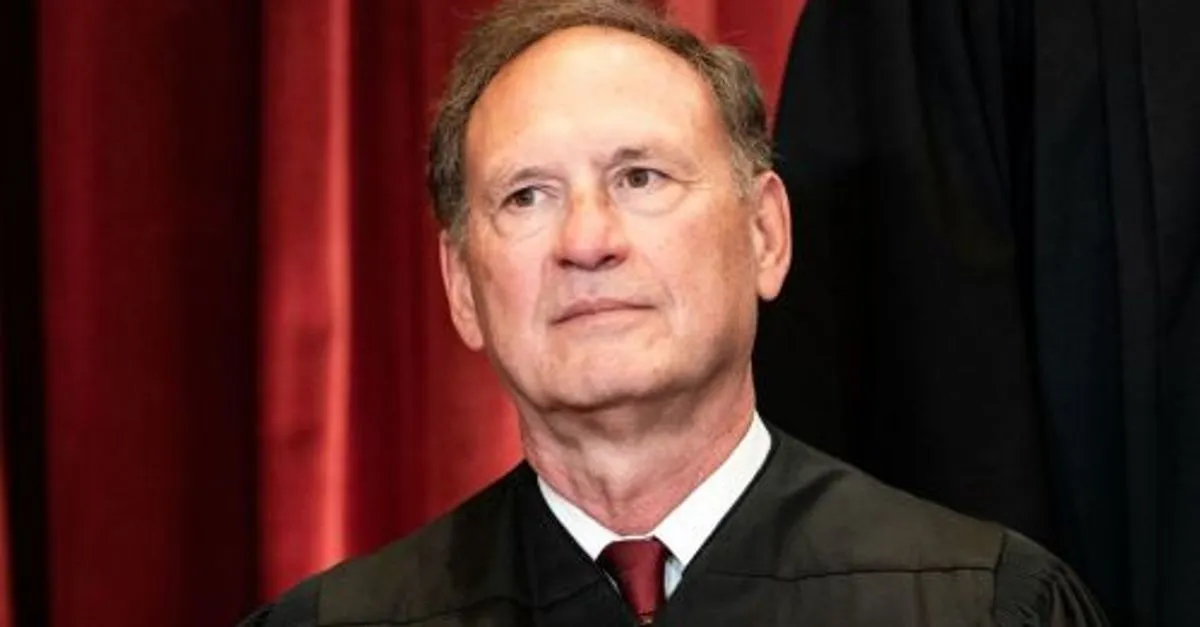 Photo: SCOTUSblog
Key points
Justice Samuel Alito recused himself from the Supreme Court's Suncor v. Boulder County climate case, announced on 28 September, one week before argument.
Justice Samuel Alito will not participate in the Supreme Court's consideration of Suncor Energy Inc. v. County Commissioners of Boulder County, the court said on 28 September. Clerk of Court Scott Harris informed the parties in a letter stating Alito "has determined that he will not continue to participate in this case." The case will be argued on 5 October, the first argument of the court's 2026-27 term.
The recusal matters because Suncor v. Boulder County tests whether local governments may use state tort law to hold oil and gas companies financially liable for climate change harms. The case began in 2018, when Boulder, Colorado, and its surrounding county alleged the companies misled the public about fossil fuels' environmental effects. Similar suits have been filed across the country, so a ruling could shape whether such claims proceed nationwide.
Why the recusal matters now
The court will also consider whether it is the appropriate venue to hear the case, and whether federal law preempts state courts in climate claims. The appeal comes from ExxonMobil and Suncor, which deny the allegations and argue local governments cannot use state laws to address a global environmental issue. Billions of dollars are potentially at stake, and dozens of similar suits have been filed across the country.
Harris's letter gave no explanation for the decision. Justices are not required to explain recusals, though they sometimes do. The lack of detail stands out because Harris's January letter announcing Alito would not participate in Chevron USA Inc. v. Plaquemines Parish, Louisiana, cited Alito's "financial interest in ConocoPhillips, the parent corporation for Burlington Resources Oil and Gas Company." That letter came less than a week before argument, as does this one.
Consumer Watchdog, a consumer advocacy group, said Alito's recusal followed its research showing he owns individual stock in ConocoPhillips and Phillips 66, two companies that have warned shareholders for years that climate lawsuits pose financial risks. The group's review found that every climate case identified as currently stayed pending Suncor v. Boulder names ConocoPhillips, Phillips 66, or both as defendants, including suits brought by California, New Jersey, Delaware, Hoboken, and eight California cities and counties.
What the watchdog found
Alexandra Nagy, organising director with Consumer Watchdog, said the recusal was "the right decision, and one he should have made from the start." Nagy said the court's Code of Conduct requires a justice to step aside when they have a financial interest in a case's subject matter. Alito does not hold stock in Suncor or ExxonMobil, the two appellants, but the ruling could affect companies in which he does hold shares.
In May, a coalition of left-leaning watchdog groups urged the Senate Judiciary Committee to investigate Alito's involvement, citing his "substantial holdings in individual oil and gas companies." At the time, a Supreme Court spokeswoman said that Alito "does not have a financial interest in any party" and had been advised that recusal was not required. The court's Code of Conduct, issued in November 2023, requires recusal when a justice's impartiality might reasonably be questioned.
Alito's recusal raises the possibility of a 4-4 split. The court has a 6-3 conservative majority; if the justices divide evenly, the oil companies' appeal would fail and Boulder's lawsuit would proceed. Gabe Roth, executive director of the court transparency group Fix the Court, said justices should be required to explain recusals, asking whether Alito stepped aside because his clerks found a connection to companies whose shares he owns.
What a 4-4 split would mean
Alito has recused himself from 22 petitions the court has rejected and one case it took up. He recused from deciding in 2023 whether the court should get involved at an earlier stage of the Colorado litigation, and did not participate in the court's 2025 rejection of an appeal in a similar Hawaii case involving ConocoPhillips and Phillips 66. His recusal in Suncor comes later in the proceedings than is usual.
The Supreme Court took up the case earlier in 2026 after Suncor and ExxonMobil filed an appeal seeking to have it thrown out. The challenge began in 2018, with the city and surrounding county alleging the companies violated state law by misleading the public about fossil fuels' environmental effects and should help cover the community's climate-related costs. The companies deny the allegations.
The court will hear Suncor Energy v. County Commissioners of Boulder County on 5 October at 10 a.m., the first day of the 2026-27 term and the first case argued after the justices return from their summer break. The outcome will determine whether local governments may pursue fossil fuel companies in state court for climate change harms.
Frequently asked questions
Why did Justice Alito recuse from the climate case?
Clerk of Court Scott Harris's letter gave no explanation, stating only that Alito "has determined that he will not continue to participate in this case." Justices are not required to explain recusals. Consumer Watchdog had called for him to step aside over his stock in ConocoPhillips and Phillips 66.
When will the Supreme Court hear Suncor v. Boulder County?
The case will be argued on 5 October at 10 a.m., the first day of the Supreme Court's 2026-27 term and the first case heard after the justices return from their summer break.
What happens if the court splits 4-4 without Alito?
The court has a 6-3 conservative majority. If Alito's absence produces a 4-4 split, the oil companies' appeal would fail and Boulder's lawsuit would proceed.
How this story was checked
- Fact-checked against 4 cited pages. 54 figures, dates and quotations in this story were found on the pages it cites.
- Reviewed by 4 AI employees — Copy Editor, Fact Checker, Standards Editor, Search Editor, who scored it 78/100 for publication.
Pages checked (4 of 4)
- scotusblog.comread and checked
- upi.comread and checked
- prnewswire.comread and checked
- usatoday.comread and checked
Written by Kaer from public reporting. Checked 28 September 2026.